



IMPERIAL BEACH (KGTV) — Imperial Beach residents are facing a difficult choice during this week's heatwave: stay outside where the smell from the Tijuana sewage crisis can be overwhelming, or stay inside and rely on air purifiers provided by the San Diego County Air Pollution Control District.
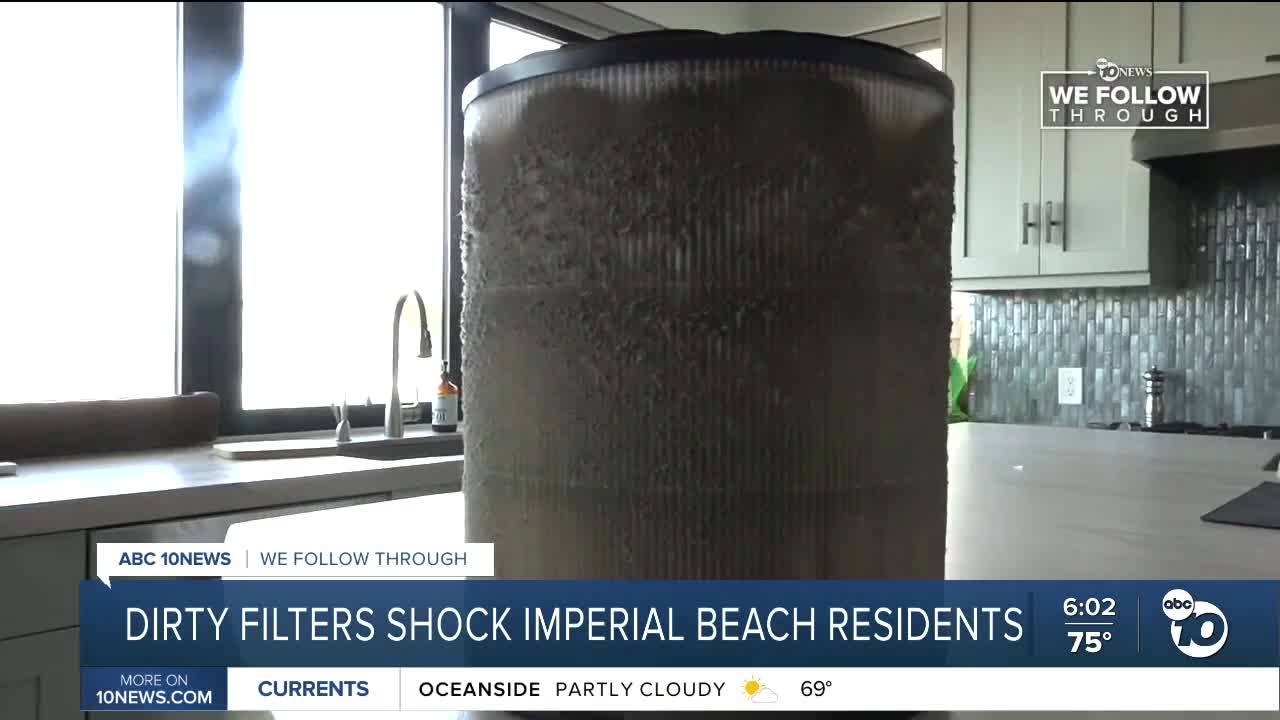
One couple in Imperial Beach recently discovered their air purifier filters needed to be switched sooner than expected.
Tom Csanadi, who lives in Imperial Beach with his wife, Marvel Harrison, said they received their air purifiers from the county less than 6 months ago. He said it has been running on full blast in his living room nearly every day, due to the persistent sewage odor.
"When I opened it up and took it out, it just took my breath away," Csanadi said.
The Air Pollution Control District wrote ABC 10News that each filter is designed to reduce hydrogen sulfide odors and protect residents from the most common airborne particles. The filters are expected to last one year.
The Air Pollution Control District added that the frequency at which the filters need to be replaced depends on factors such as air purifier placement, speed setting, operating hours, dust particles, pet dander, and manufacturer maintenance.
However, Csanadi and Harrison said the indicator light, indicating it was time to switch filters, still turned on only after four to six months of use.
Harrison said the South Bay sewage crisis has taken a toll on her health.
"On September 24, I was diagnosed with reactive airway disease," Harrison said.
She said she has been in contact with UC San Diego and San Diego State researchers who have been tracking the toxins brought in by the sewage.
Harrison recently contacted the researchers after taking her dog for a walk.
"I contacted the researchers and said, Is the hydrogen sulfide really high right now? And [the researcher] said, Well, no, it's actually showing that it's not, but for the first time we've seen nitrogen compounds through the roof," Harrison said.
Harrison said the ongoing heatwave may be making conditions worse.
"I think the heat holds the stench in," Harrison said.
Just a short distance from the beach, the South Bay Urgent Care Clinic is seeing a surge in patients.
Owners Kimberly and Matt Dickson said they are treating everyone from children to the elderly.
"Most recently, what we're seeing is an increased amount of patients with respiratory symptoms needing to use their inhaler more," the Dicksons said.
"We see all the whole gamut from young children who have asthma, and then to the elderly with chronic lung disease, COPD," the Dicksons said. "And they're missing school, missing work because of these symptoms."
The Dicksons said they have also seen air filters just as dirty as those in the Csanadi and Harrison homes, including their own filters that they received from the Air Pollution Control District.
"It's everybody who has an air filter is seeing that ours look the same, so that's what's in our air down here, and it's quite frightening. It's unacceptable," Dickson said.
Imperial Beach residents say they want the County to be more involved in addressing the ongoing issue.
They are asking for an alert system to notify the community when transboundary sewage flows are at their peak. They also want guidance for clinics so physicians better understand how to treat respiratory issues linked to the sewage smell.
As of Monday, UC San Diego researchers started posting all the toxin data they've been collecting for nearly the past two years near hotspots in the South Bay. Residents can see hydrogen sulfide levels and more updated every minute. The data is coming from the Coast, Nestor, and other locations. To see the live updates, click here: https://airborne.ucsd.edu/h2s
