

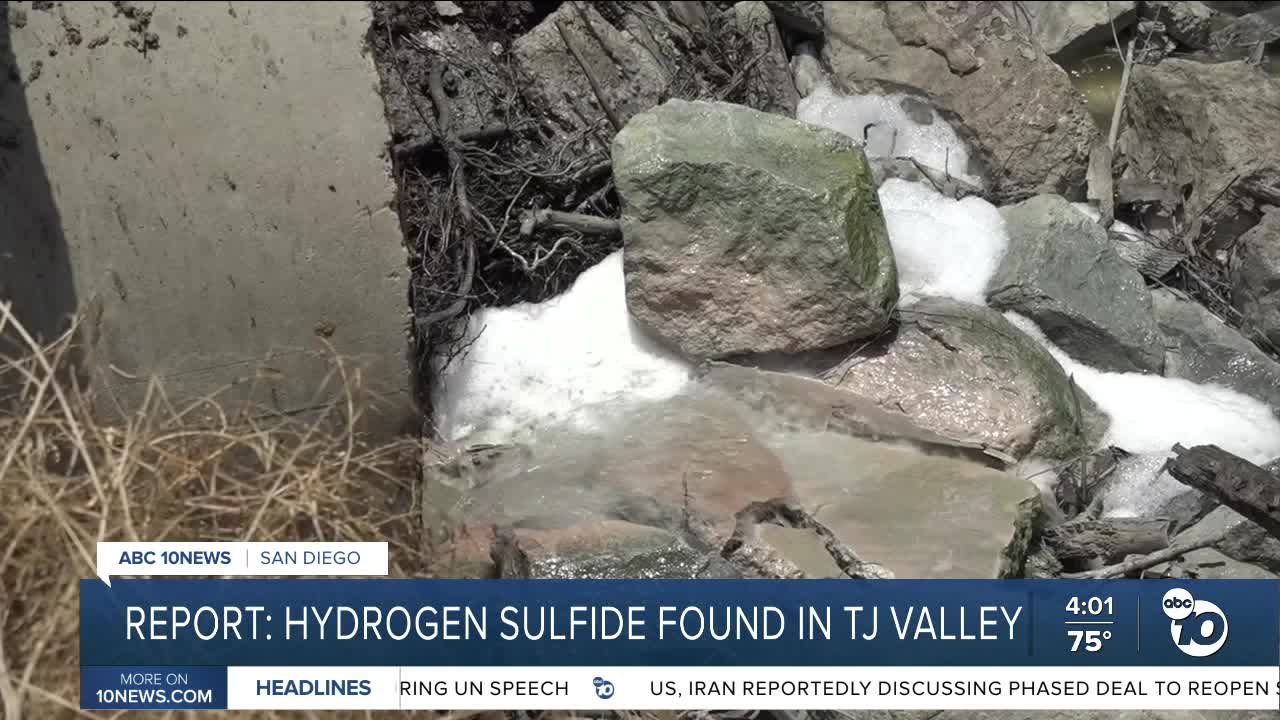


TIJUANA RIVER VALLEY (KGTV) — A new federal report from the CDC and the Agency for Toxic Substances and Disease Registry officially recognizes toxic gas from the Tijuana sewage crisis as a public health hazard, detailing the impact of hydrogen sulfide on South Bay communities.
The 80-page document, published by an agency within the U.S. Department of Health and Human Services, found hydrogen sulfide — the toxic gas that smells like rotten eggs — is polluting the air, soil, and water in South Bay communities including Nestor, Imperial Beach, and Coronado.
Federal researchers found the gas in 96% of their samples and identified a significant public health impact, including at Berry Elementary School.
The report points to decades of untreated sewage, failing infrastructure, and the Saturn Hot Spot as the top sources of hydrogen sulfide. It also notes the crisis is disproportionately affecting Latino and Hispanic communities, along with city and outdoor workers.
While air purifiers are being provided to some residents, the report says that program is not 100% effective.
Leon Benham, president of Citizens for Coastal Conservancy — a nonprofit that fights the Tijuana sewage crisis — says the report is missing something critical: a plan.
"I'm done with research because we have already done the reports; implement the plan! That's what we're frustrated with in the South Bay."
Benham has spent 26 years researching the causes of the Tijuana sewage crisis. He says the hydrogen sulfide exposure traces back to a project first proposed in the 1990s.
"In 1993, the County moved the river north and one of the problems is that it's flat and it ponds it and that's the source of the stink."
Benham believes that if the pipeline could be put back to where it was before, it would protect South Bay communities from the toxic gas.
"Because that way it's farther away from our homes."
