

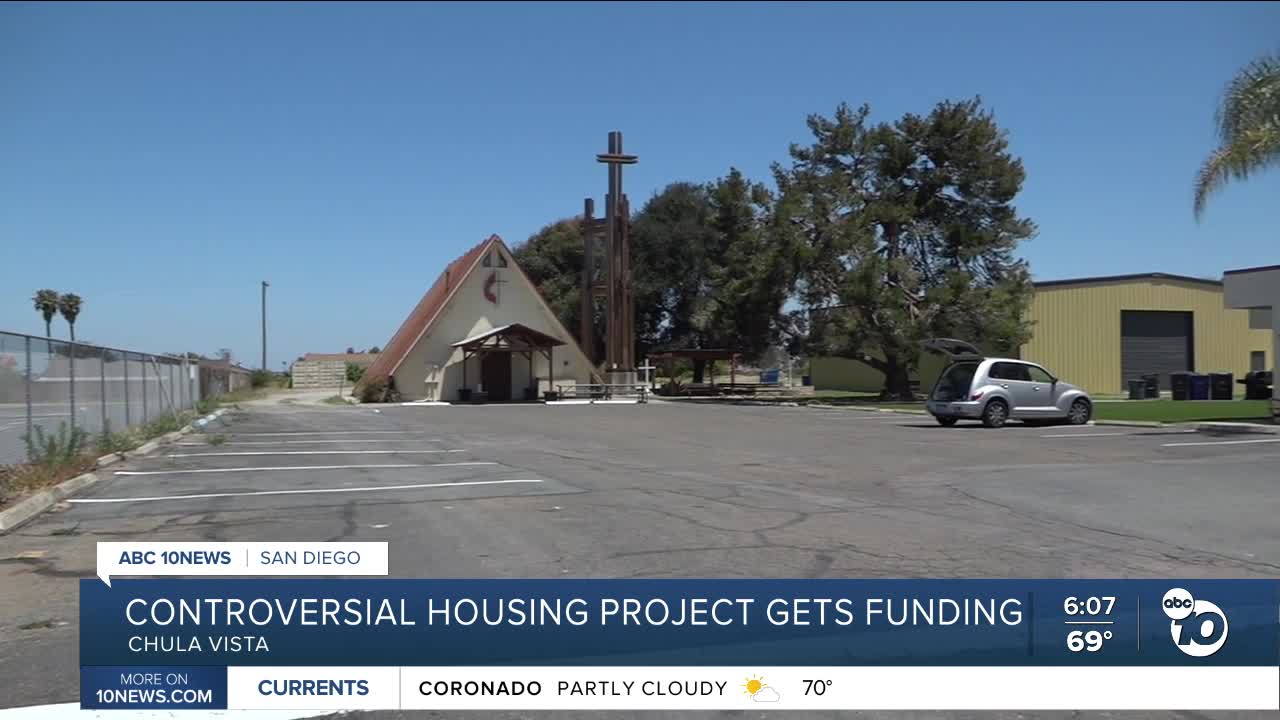


CHULA VISTA (KGTV) — A controversial affordable housing project planned at a Chula Vista church property is moving forward, despite strong opposition from some nearby residents.
Park Hill United Methodist Church is located on East Naples Street. It is able to build affordable housing under California Senate Bill 4, also known as the "Yes In God's Backyard" bill.
It allows faith-based organizations and nonprofit colleges to bypass local zoning restrictions to build affordable housing. In this case, it's enabling Park Hills Methodist Church to move forward with the development, even though the neighborhood was not zoned for a housing project of this scale.
Wakeland Housing, which Park Hill United Methodist Church hired as their developer, said the project will have around 60 units and accommodate individuals or homes with anywhere between 30%-60% of the average median income. The project is estimated to be more than $50M.
Bill Kalser, a neighbor who is opposed to the project, said the process has left local government without a meaningful role.
"Something like this should have at least had this municipality to govern zoning requirements and planning requirements. The city is completely out of the loop. They can do nothing," Kalser said.
The Chula Vista City Council discussed the project several times, as members had to vote on whether to direct $4M of public funds toward it. While SB4 prevented the Council from stopping the development, members still had a say in whether the money should go to Park Hill United Methodist Church's project or another affordable housing proposal.
Councilmember Cesar Fernandez did not respond to a request for an interview. However, Councilmember Michael Inzunza, who met with neighbors in the past to hear their concerns, said he would vote yes if developers met him on specific terms the neighbors discussed with him.
"I'm looking for [Wakeland Housing] to bring down the density of the buildings, maybe take down the units by six or so, add at least 20 to 30 more parking spots, and also the site visibility in the back so it's not intrusive on the neighbors behind them," Inzunza said.
At Tuesday night's City Council meeting, developer Wakeland Housing verbally agreed to reduce the number of units from 68 to 62, along with other commitments.
The council then voted 4-1 in favor, with Mayor McCann casting the lone no vote.
Residents who have lived near the church for many years say their interests are being steamrolled and had hoped the $4 million funding vote would slow or stop the project, giving their concerns a better chance of being heard. One neighbor said the community received little advance notice.
"We received a flyer in the mail probably three weeks ago. That was our first inkling," Stephanie Rodriguez, who opposes the project, said.
Rodriguez lives below the church's softball field and said she has spent thousands of dollars in repairs to her yard after her home was flooded by runoff from the church's property. She is worried about what a multi-story complex will mean for her home.
"I was unaware that churches were given this right, and taxpayers, the people that pour into their neighborhoods and the communities are at their mercy," Rodriguez said.
Neighbor Sandra Skare expressed concern about parking and traffic congestion.
Now they worry the verbal agreements reached at Tuesday night's council meeting won't hold because of the protections afforded by SB 4.
Wakeland Housing responded to concerns and said:
"Although SB4 would allow greater density, our team has intentionally chosen to build fewer units because we are invested in being a good neighbor to the existing homeowners and community. Beyond that commitment, we will be subject to the terms of our loan documents with the city, which will ensure that the scope of the project won’t go beyond what City Council directed last night, 62 units."
Neighbors in opposition to the project said they knew from the beginning they could not stop the project, and are not against affordable housing. They were just trying to find the right plan that fits their neighborhood.
Now, they said they are trying to send a warning to other communities.
"This can happen in anyone's neighborhood," Rodriguez said. "Anyone who butts up against church property can come in and work with developers under the guise of, "Well, we need affordable housing." We need changes within our government to advocate for all people, not just those who need cheaper housing."
Park Hills Methodist Church also responded to neighbor concerns, saying in part:
"We understand that some residents have concerns about this new development, and we respect their right to express their views. Park Hill United Methodist Church's goal has always been to work collaboratively with neighbors, local leaders, and community stakeholders throughout the process to ensure the project is thoughtfully designed and integrated into the surrounding area. This is why the number of parking spaces will be increased dramatically from the initial proposal we received.
The land that the development will be on has been used in the community for the last 50+ years and will now be serving the community to provide safe, quality housing for individuals and families who contribute to our community every day, including workers, seniors, veterans, and others facing housing challenges. Access to affordable housing is essential for a strong, stable, and economically vibrant community."
