

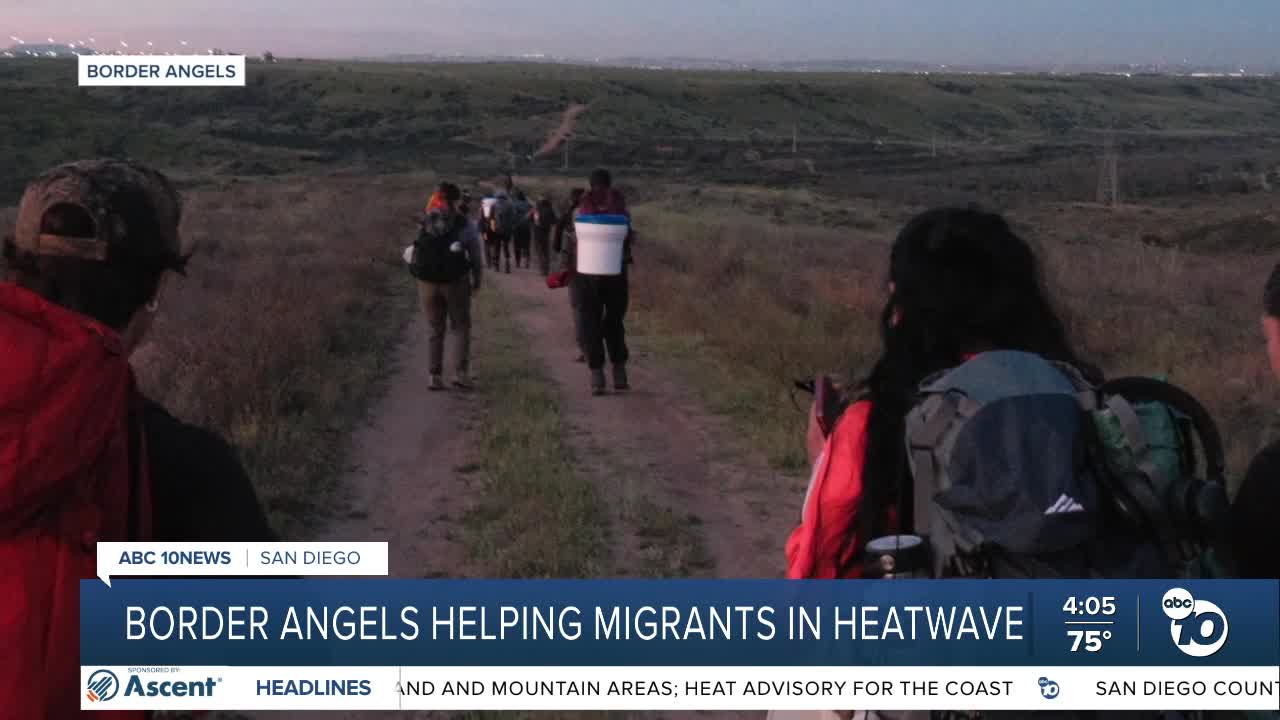


SAN DIEGO (KGTV) — As triple-digit temperatures settle into the San Diego border region this week, nonprofit Border Angels is preparing to help migrants and day laborers cope with dangerous heat.
The nonprofit, which provides humanitarian aid to asylum seekers, migrants and refugees, is planning to head out this weekend for water drops in remote desert areas. Another team will head out on Tuesday to distribute cold water to day laborers waiting for work throughout San Diego County.
"Preventing dehydration has been a core part of Border Angels' humanitarian work," said Dulce Aguirre, the organization's interim executive director.
Border Angels has conducted water drops since its founding in 1986. Volunteers travel into remote areas of the Otay Mountain Wilderness and surrounding desert, leaving water, electrolytes and other supplies in shaded locations along migrant routes.
"Our priority is always trying to save as many lives as we can," Aguirre said.
The nonprofit says volunteers fill buckets and crates with water and supplies before placing them in areas protected from direct sunlight to help keep them usable in extreme heat.
In addition to desert water drops, Border Angels is visiting locations where day laborers gather, including Home Depot parking lots, to hand out cold water. This effort is a part of their regular Day Laborer Outreach in San Diego.
"We visit different Home Depots and make sure the day laborers looking for work are able to have access to cold water," Aguirre said. "They're so focused on finding work and helping their families that sometimes they forget about drinking water or taking a lunch with them."
Aguirre said Border Angels has observed changes in migration patterns under the current administration, but the demand for humanitarian aid remains.
"With our water drops, we continue to see the need," Aguirre said. "Water bottles continue to be consumed, so we continue to restock those areas."
The organization's efforts come as forecasters warn of dangerous heat across inland San Diego County and the border region, where prolonged exposure to high temperatures can quickly lead to dehydration, heat exhaustion and heat stroke.
