

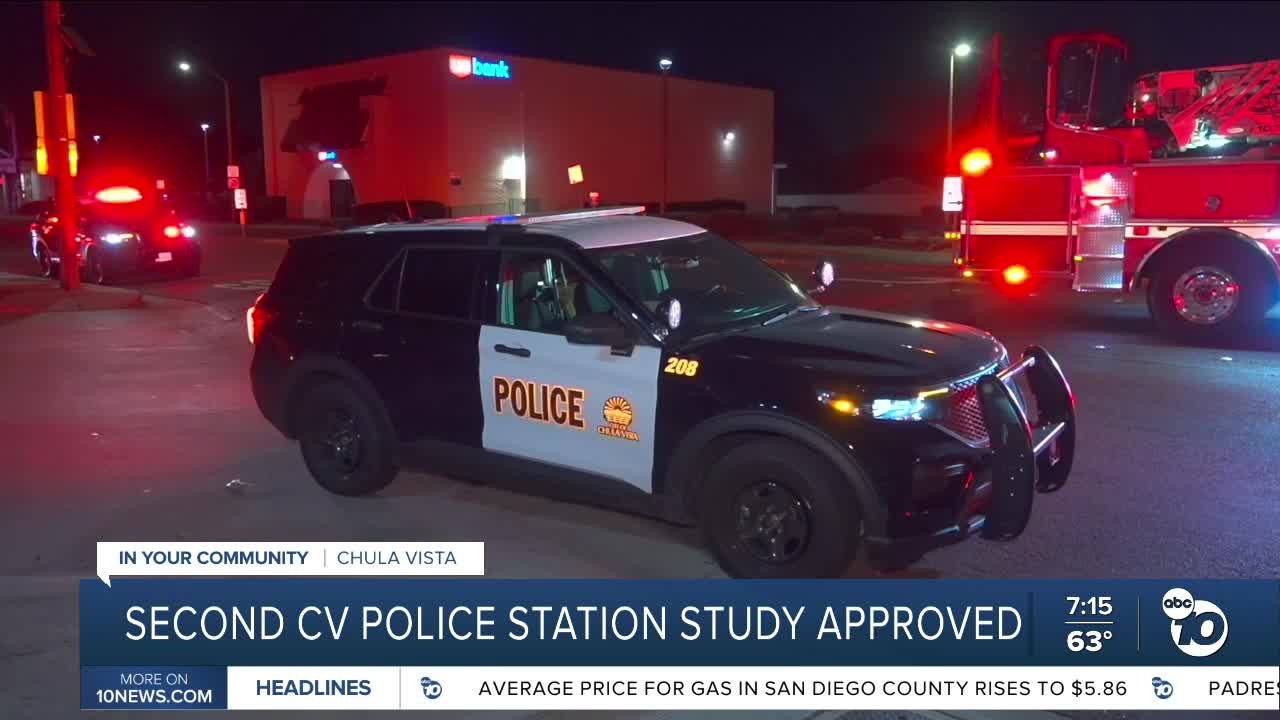


CHULA VISTA (KGTV) — The Chula Vista City Council took a major step Tuesday night toward adding an east side police substation.
In a unanimous 5-0 vote, leaders approved spending more than $393,000 on a study to determine whether a second police facility is needed.
The newly approved study will examine current operations, response times, staffing, and whether the current headquarters has sufficient space to meet demand. It will also determine where an east side substation could be located.
The study will be conducted by Carrier Johnson + Culture and is expected to be completed by this November.
City leaders say Chula Vista's population could jump from about 281,000 to 350,000, driven by major projects such as the Bayfront, Millenia, Otay Ranch, and a future university. Currently, the city's only police headquarters is on the west side.
Councilmember Michael Inzunza said that, with about 300,000 residents, it does not make sense for Chula Vista to have only one police station.
"The number one concern [my constituents] brought is, why don't we have a police station in Chula Vista? We have one police station that is about 25 minutes away from Eastlake, Otay Ranch, and Winey Walk," Inzunza said. "The city of San Diego alone has nine police stations."
Many residents on the east side say the distance to the west-side headquarters can feel like a problem, whether there is a major incident requiring a large police presence or even a simple civil matter, such as filing police reports.
On Tuesday night, Interim Chief Dan Peak said the department is feeling the City's growing demands, including issues ranging from call volume to evidence storage.
The Chula Vista Police Department must remain neutral on its comments regarding this potential new station.
However, Sergeant Manny Salazar, CVPD's Public Information Officer, shared data indicating that their officers already patrol the eastern sector rather than responding from headquarters, with the goal of reaching priority-one calls within 6 minutes or less.
