

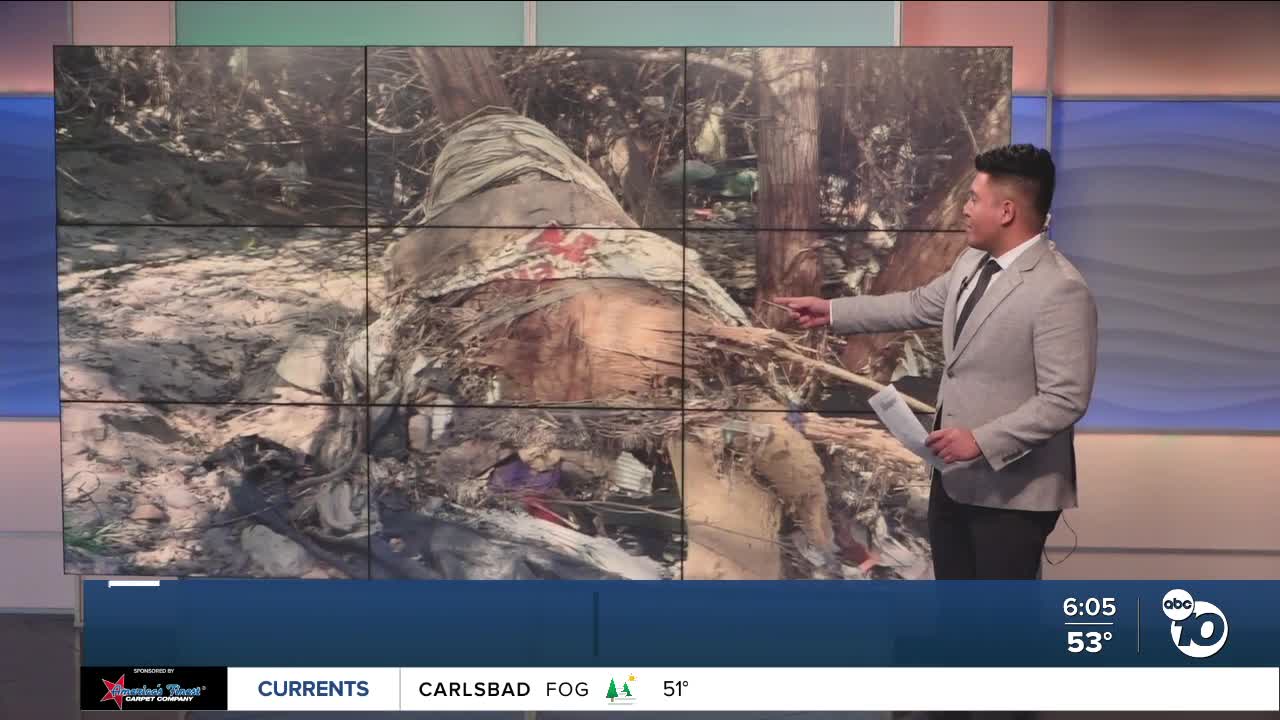


We've been following the ongoing pollution crisis in the Tijuana River Valley, and today, we're zeroing in on a spot that's drawing a lot of attention: Trash piled up in Smuggler's Gulch, just feet from where stormwater flows straight into the estuary.
It is a mess out there. Broken plastic, household trash, debris stretching across what was a creek bed just weeks ago. All of this is sitting in Smuggler's Gulch, a critical channel in the Tijuana River Valley.
During heavy rain, the creek bed turns into a roaring river. When that happens, trash gets swept downstream and straight into the Tijuana River Estuary and, eventually, the ocean.
Since then, I've been trying to figure out who's responsible for cleaning this up. Here's what I found:
- The area is managed and maintained by the County of San Diego, which means it's ultimately their responsibility. Cleanups typically happen once a year — and that day is today.
This part of the Tijuana River Valley is a complex network of streams and creeks all feeding into the estuary. County officials say trash booms can only do so much, especially when flooding moves fast and carries heavy debris.
Nearly $3.5 million in federal funding has been secured for this area. That money was brought home by Rep. Juan Vargas and Sen. Alex Padilla. That money is specifically meant for dredging and removing trash, sediment and debris.
Separately, the county is also moving forward with the Smuggler's Gulch Improvement Project — adding sediment basins, larger culverts, and trash capture devices. That project is fully funded by the California State Coastal Conservancy and is currently in design and environmental review.
County officials confirm they're aware of the issue and say today's cleanup should clear this specific area. But with millions already spent and trash continuing to flow through the system, the biggest question is: Is an annual cleanup really enough?
