

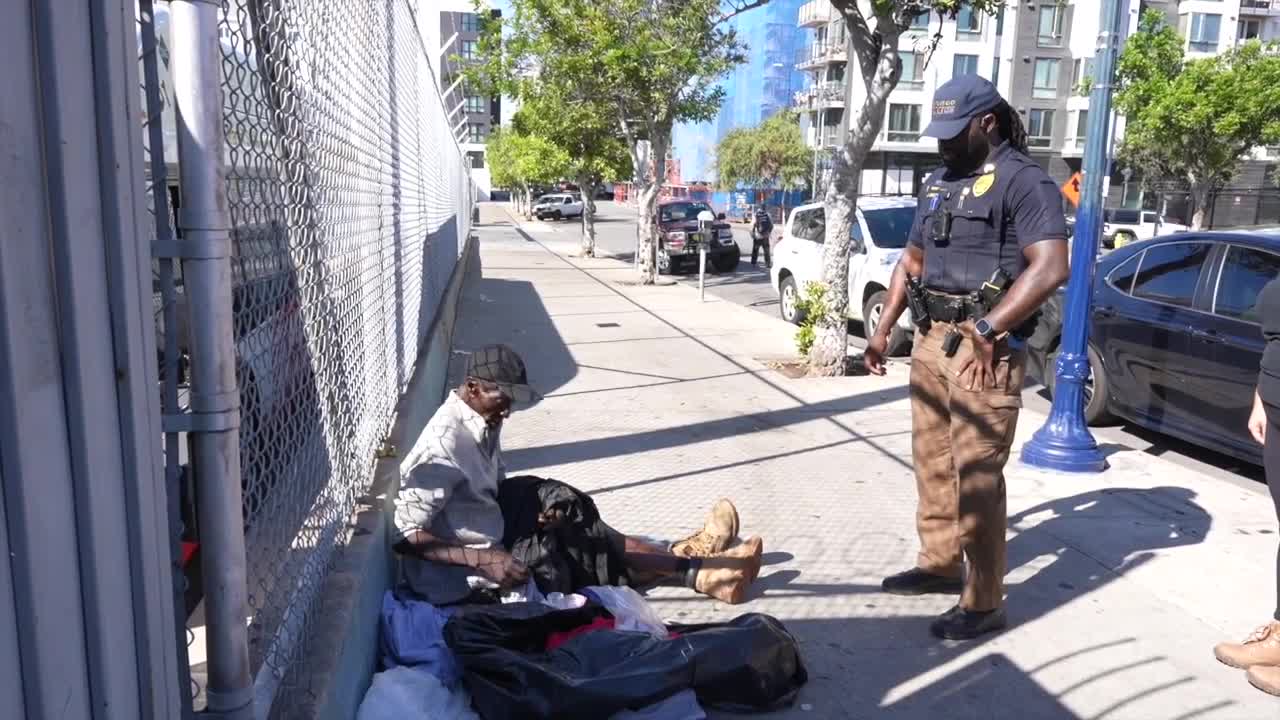


SAN DIEGO — Helping someone get off the streets isn't always as simple as offering a bed. San Diego police say it can take repeated visits, building trust and finding available services.
On 15th and K Street in East Village, homeless encampments line the sidewalk. It's a scene many people drive by, but for the people living here, this is home.
I shadowed the San Diego Police Department's Homeless Outreach Team to see firsthand what it takes to help people go from living on the streets to finding a stable place to sleep.
Whether it's a tent or the cold concrete, behind every encampment is a person with a story.
One woman, who asked us not to share her name, has been living on the streets of downtown for the past two months. She has a job but doesn't make enough to afford a place of her own.
"The guy that I was with and the apartment that we had, he could afford it and I couldn't," she said.
She said the uncertainty weighs on her every day.
"I'm like constantly worried about my stuff gonna get thrown away, or like possibly going to jail and then I lose my job, which that's not what I want," she said.
For the San Diego Police Department's Homeless Outreach Team, helping people find stability starts with showing up.
"We come and, you know, we offer people services and we're pretty familiar with everybody that was over here," Akilah Coston said.
The team asks people what they need, whether that's mental health services or a shelter bed. But even when someone is ready for help, there may not be a bed available right away. When that happens, Coston said they work to find them services in other parts of the county.
"I think the main, main concept is just to keep showing our faces," Coston said.
Sergeant Jarrel Davis said building trust can take time, staying in touch and constantly revisiting spots that have the most people living on the streets.
"Sometimes the initial rapport can be built right away, and it's something just simple just by interacting with something that they understand," Davis said.
For one man, it took a week to find an open shelter bed. He spent his nights sleeping on concrete before getting up to work his construction job.
"The construction, mainly demolition, and then you're sleeping on the concrete all night and gotta get up and go to work all day," he said.
The outreach team checked on him every day until finally they found him a bed.
"I literally left work early. I never, I never missed work. I even left work earlier so I could uh, go experience that so I know it's gonna be awesome finally," he said.
While success stories don't happen overnight, Davis said their work is a full-service operation, from the greeting to taking people directly to get the help they need.
"We just continue to chip away at that until we ultimately get them into a better situation because that's, that's the goal here," Davis said.
For this team, it's more than a job. It's a calling to help neighbors on the streets who just need someone to believe in them.
This story was reported on-air by a journalist and has been converted to this platform with the assistance of AI. Our editorial team verifies all reporting on all platforms for fairness and accuracy.
