

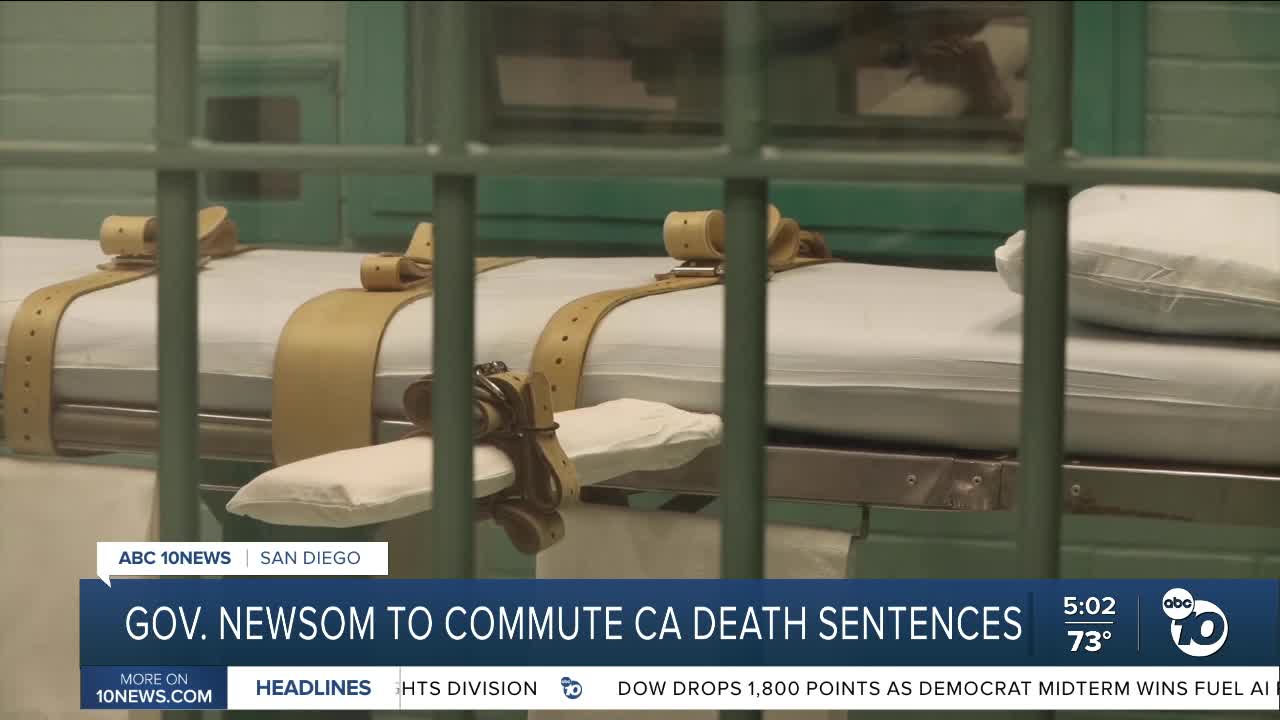


SAN DIEGO (KGTV)- Gov. Gavin Newsom has announced a sweeping decision to commute all 548 death sentences in California, meaning every inmate currently on death row will now serve life in prison without the possibility of parole.
Newsom effectively ended death sentences for hundreds of convicted killers, including here in San Diego. While no one is being released, this is a move that could be painful for families who have waited years for justice. Newsom announced the move Thursday, saying the death penalty is "incompatible" with California's values.
Jan Ronis, a criminal defense attorney, says this means these inmates will not be released and their convictions will not change, they will just no longer face execution.
"The real question is what is his motive and whether it was political or whether it was just an issue of humanitarianism," Ronis said. "You're now gonna be doing life in prison without the possibility of parole as opposed to waiting for the execution, which, as we all know, is a long wait and most people, most people die before the wait's over," Ronis said.
In an open letter, Newsom acknowledges the pain this decision could cause victims' families.
"Many of these cases are decades old. Many of the family members who were expecting this to occur have passed on. There are remaining family members. Victims of crime and relatives of victims of crime, this doesn't sit very well with them," Ronis said.
The impact is local. Jesse Michael Gomez, the man convicted of killing San Diego police Officer Jonathan "J.D." De Guzman, was sentenced to death back in 2022. Now, that sentence will be changed to life in prison without the possibility of parole.
In a statement, the San Diego Police Officers Association says, "The victims of these horrific crimes and their families have already endured unimaginable suffering, and they deserve better."
California has not carried out an execution since 2006. And in 2019, Newsom imposed a moratorium that stopped executions.
This move has sparked debate over justice, accountability and the impact on the families of the victims. The California Supreme Court must review and approve the commutes.
This story was reported on-air by a journalist and has been converted to this platform with the assistance of AI. Our editorial team verifies all reporting on all platforms for fairness and accuracy.
