

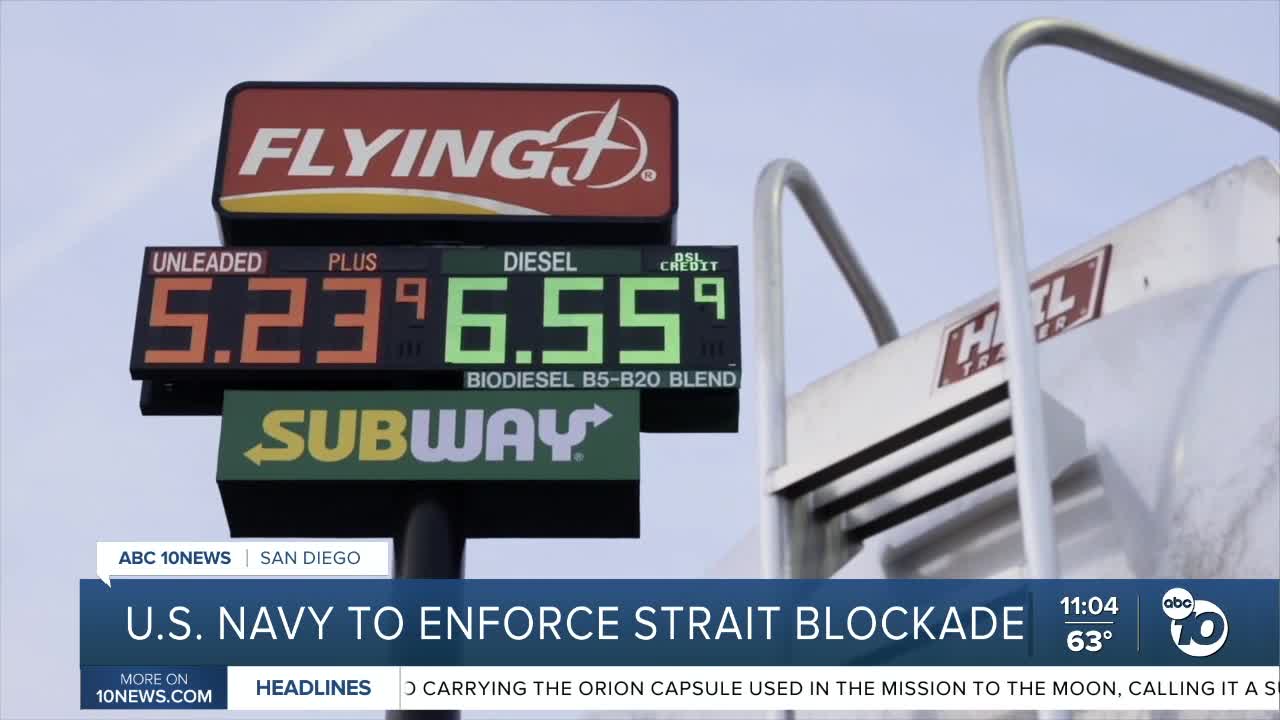


SAN DIEGO (KGTV) — President Trump announced the United States Navy will enforce a blockade along the Strait of Hormuz starting Monday, blocking maritime traffic in and out of Iranian ports.
"We got to see ships going back and forth, so we knew wherever the ships were moving probably wasn't mined, and that was valuable intelligence, but at this point, we have to shut that down," Kempfer said.
The move involves a significant military footprint from San Diego currently in the Middle East, including carriers and units from Camp Pendleton and Miramar.
"So, yes, there's a large San Diego presence that's in the Gulf of Oman, Persian Gulf right now," retired Marine intelligence officer Hal Kempfer said.
Kempfer believes the blockade will last through the next cease-fire cycle and bump up oil prices worldwide until the U.S. can get a passageway open in the strait.
"Once that's opened, once we can get commercial ships going in and out of the Strait of Hormuz," Kempfer said. "That's going to alleviate pressure all over the world, you know, it's not just oil, but … liquefied natural gas."
According to AAA, the blockade comes just after gas prices started to drop.
Sunday's average in San Diego was $5.92, down a few cents from the week before. The last time prices notably dropped before this week was in mid-December, down to $4.52 a gallon.
"So, when oil drops, even a little, gas prices tend to follow," said Kandace Redd, a AAA Spokesperson.
Only time will tell how long the most recent downward trend will last with the blockade set to disrupt oil exports.
"We know that the market is closed over the weekend and has not yet reacted to the most recent developments, this most recent news," said Redd. "But again, keep in mind that the Strait already had about more than 90% drop in traffic. So, again, it really is just still unclear how the markets will react to the blockade.”
