



SAN DIEGO (KGTV) — President Trump announced he is extending the ceasefire in the Iran conflict, just one day before the deadline of the initial two-week agreement.
While the extension delays the immediate threat of escalation, questions remain about what comes next and what it means for civilians caught in the middle.
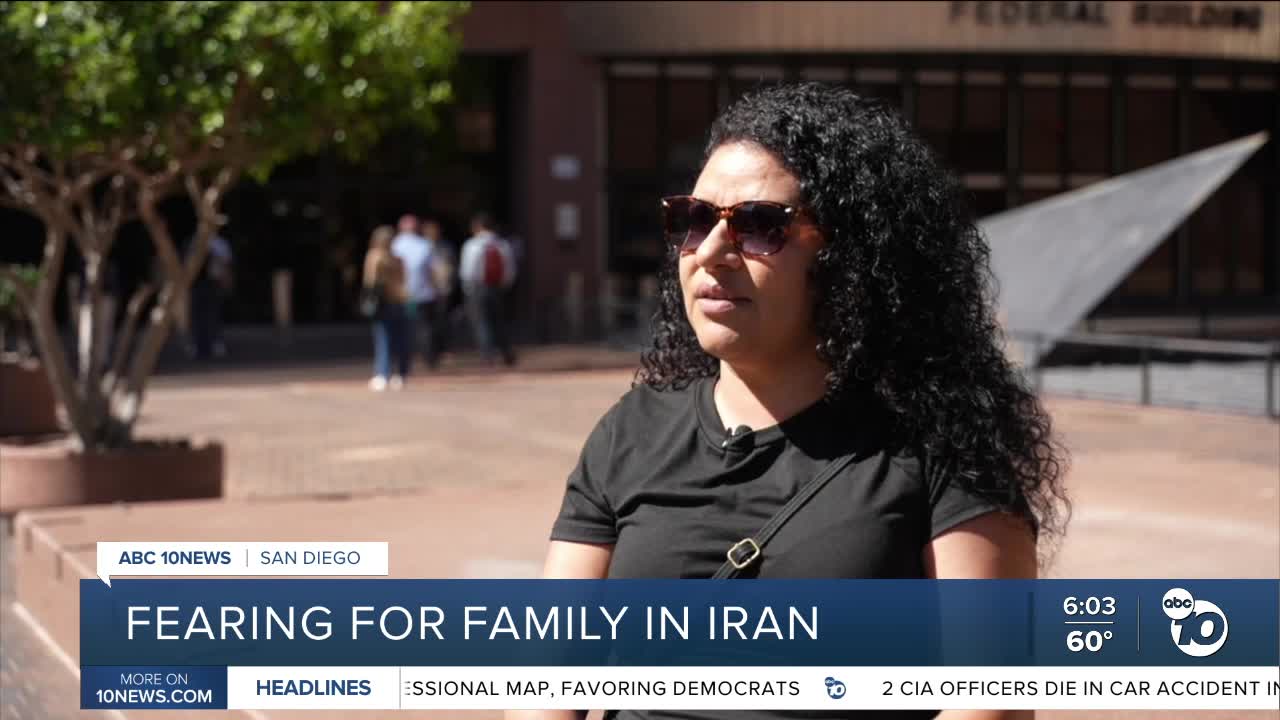
Here in San Diego, that uncertainty is taking a toll on local Iranian-American families, many still desperate for answers from loved ones overseas.
Civilian risk lower than feared, but not zero
Concerns about civilians being caught in the crossfire remain high, but new context suggests the risk may be lower than many initially feared. According to the United Nations Refugee Agency, as many as 3.2 million civilians have fled Tehran, moving north to safer areas.
Tehran, where much of the bombing has been concentrated and where key power infrastructure is located, has seen significant population movement. Northern Iran, roughly 200 miles away, has become a primary destination for those seeking safety.
Meanwhile, along the Strait of Hormuz — an area central to military tensions — there are very few civilians remaining in immediate conflict zones. While the danger is still present, experts say the likelihood of large numbers of civilians being directly hit by missile strikes is lower than many fear.
Communication blackouts leave families in the dark
Despite the ceasefire extension, communication remains a major challenge. Internet blackouts and limited connectivity inside Iran have made it difficult for families in the U.S. to reach loved ones.
Dr. Tania Hormozi, an Iranian-American in San Diego, says she has been trying to contact her family for weeks, with no success.
“The silence is the hardest part,” she said.
Hormozi described growing fear for her relatives, including a family member who is ill and unable to access medication due to instability on the ground.
“It’s really scary … just trying to execute anyone that’s on the street even if they’re not there to protest,” she said. “It’s really scary mostly through living through the eyes of him.”
Local protests continue as community speaks out
Even with the ceasefire extended, uncertainty remains and many in San Diego’s Iranian community are continuing to take action. Hormozi says she and others have been protesting weekly, but emphasizes their message is often misunderstood.
Their demonstrations, she says, are not about supporting war but about opposing Iran’s Islamic regime.
“We are protesting the Islamic regime 100%. We need it out of our country,” she said. “We don’t want them to continue killing our people.”She added that many protesters see themselves as advocates for those who cannot speak freely.
“We are just the voice of Iranians that are innocent in prison for no reason.”
What happens next
Even with the ceasefire extended, analysts warn that conditions on the ground can change quickly. That means communication challenges — and safety risks for civilians — could shift day by day as the situation evolves.
For families in San Diego still waiting to hear from loved ones, the uncertainty continues.
