

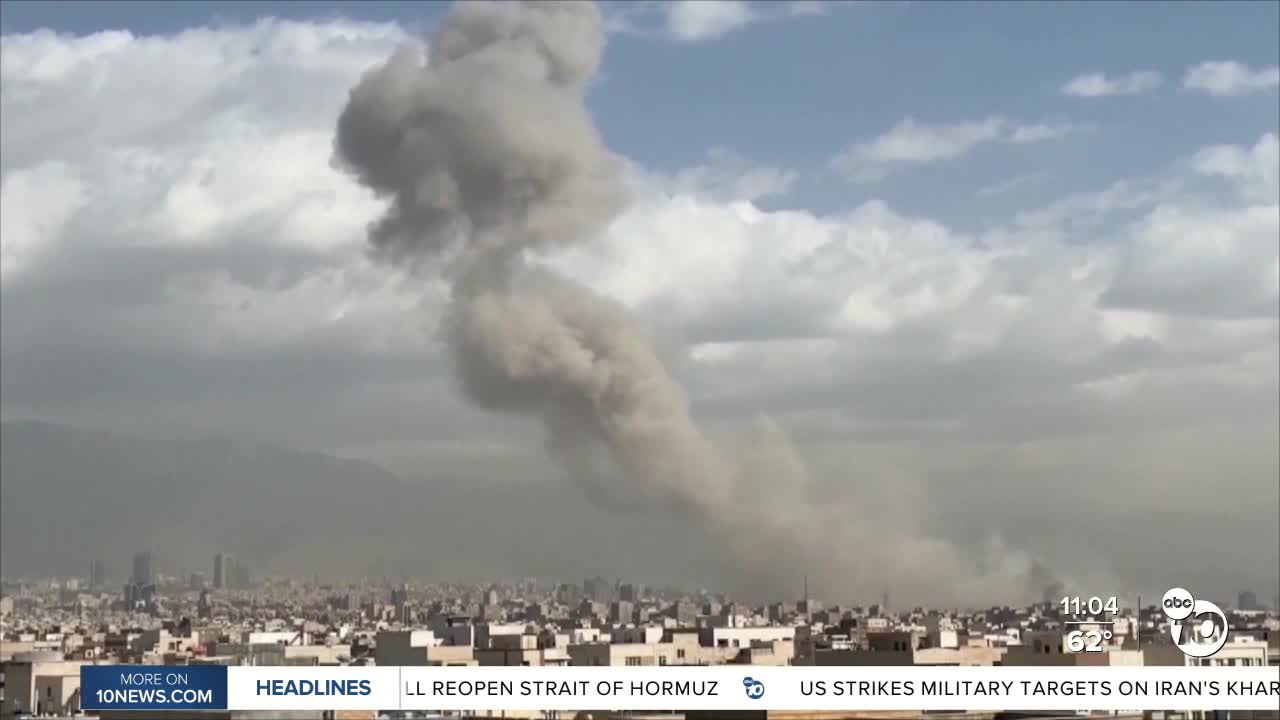


SAN DIEGO (KGTV) — A two-week ceasefire between the U.S. and Iran is offering a moment of relief after 39 days of tension and extreme threats from President Trump, but building a lasting peace is far more complex.
Darren Kew, dean of the Joan Kroc School of Peace Studies at the University of San Diego, said the potential ripple effects from this war could reshape the world.
"I look at everything from US national security in peace building to democracy in peace building," Kew said.
Leading up to Tuesday's ceasefire, Kew looks at Trump's theatrical and aggressive negotiating style, which he said reflected the President's background as a real estate mogul and reality television star, with rapidly shifting messages before threatening to kill "a whole civilization," as he wrote on Truth Social.
"That works under certain circumstances, but at the global level, it's a far more dangerous environment and the stakes are so much higher. Those kind of tactics have certain strengths but also real costs as well," Kew said.
ABC 10News asked Kew if the ceasefire agreement indicates that the president's unconventional negotiating tactics worked.
"I think the president certainly was very fortunate that the Iranians were willing to negotiate at this point," Kew said.
The ceasefire deal includes a temporary end to active fighting and the reopening of the Strait of Hormuz for two weeks while the two sides work out a long-term agreement.
"My sense is that the best we're going to get is some sort of codified peace, you know, codified ceasefire, essentially, something that takes these basic moving pieces that we're looking at now and sort of extends those into the future for an indefinite period," Kew said.
Looking ahead, Kew said peace between the U.S. and Iran does not resolve the larger issue from a geopolitical perspective, nor does it replace what the U.S. has lost when it comes to global economics and international relations.
"We have, I fear, lost some of the initiative, and now we're going to be, you know, responding to other actors that are going to be making decisions for themselves as to how they want to structure the world order, and that may not work 100% in our interests. So I think there's still time, but I'm worried," Kew said.
For now, the world is left looking at the present and waiting to see what comes next.
Follow ABC 10News Anchor Max Goldwasser on Instagram, Facebook, and Twitter.
This story was reported on-air by a journalist and has been converted to this platform with the assistance of AI. Our editorial team verifies all reporting on all platforms for fairness and accuracy.
