



JULIAN, Calif. (KGTV) – Julian can bring visitors from all over Southern California and beyond the Golden State.
“We just wanted to enjoy some, you know, apple pie and some good food. We also wanted a little bit of a small-town feel,” Jillian LeDuff, who was visiting from Long Beach, said.
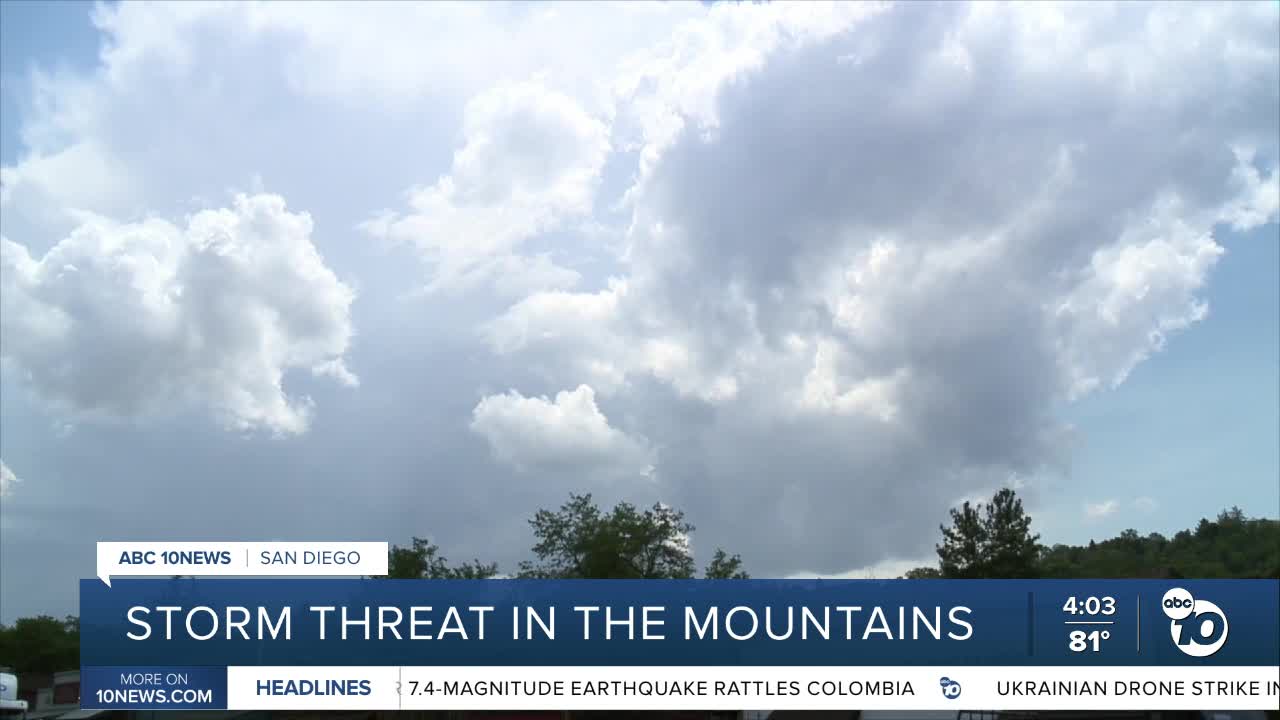
It was a hot and humid Monday in the mountain town. But, the weather is also expected to be brewing other conditions for Julian and the rest of the mountain region.
“This afternoon and again tomorrow afternoon, we are expecting some widespread monsoonal thunderstorms over the mountains,” Sam Zuber, a meteorologist with National Weather Service - San Diego, said.
Zuber said these two days of expected rain on Monday and Tuesday could bring some flooding potential and thunderstorms.
“There's limited road networks, and so if you don't have to go out during the afternoon hours, I would avoid if you could,” Zuber said.“When we're dealing with fires in the fire season as well, another thing that we worry about are burn scars. And so any areas that have recently burned or seen massive fires, any rainfall that kind of goes over them could result in some localized debris flows as well.”
Jillian LeDuff and Corey Huber told ABC 10News that they and their dog Honey have already felt the showers during their stay in Julian.
“It kind of hit us out of nowhere, so we had to actually walk back to the car, grab the umbrella,” Huber said. “Yeah, we got what we needed yesterday, and so we're trying to get everything done before we head out now.”
If you are out and about in the mountains or close to home, the National Weather Service said if you hear thunder, get inside as soon as you do.
“Lightning can strike pretty far away from any thunderstorm, so we recommend that if you hear thunder, you are close enough to be struck by lightning,” Zuber said. “Now, we recommend that you also stay inside for at least 30 minutes after the last, uh, crackle of thunder that you hear. And then that's the way to make sure that you stay safe from any kind of lightning threat.”
Obviously, another tried-and-true phrase with the possibility for these storms is, “Turn Around, Don’t Drown.” You never know just how deep the water on the roadway is or how much it has been eroded away by those flood waters.
