

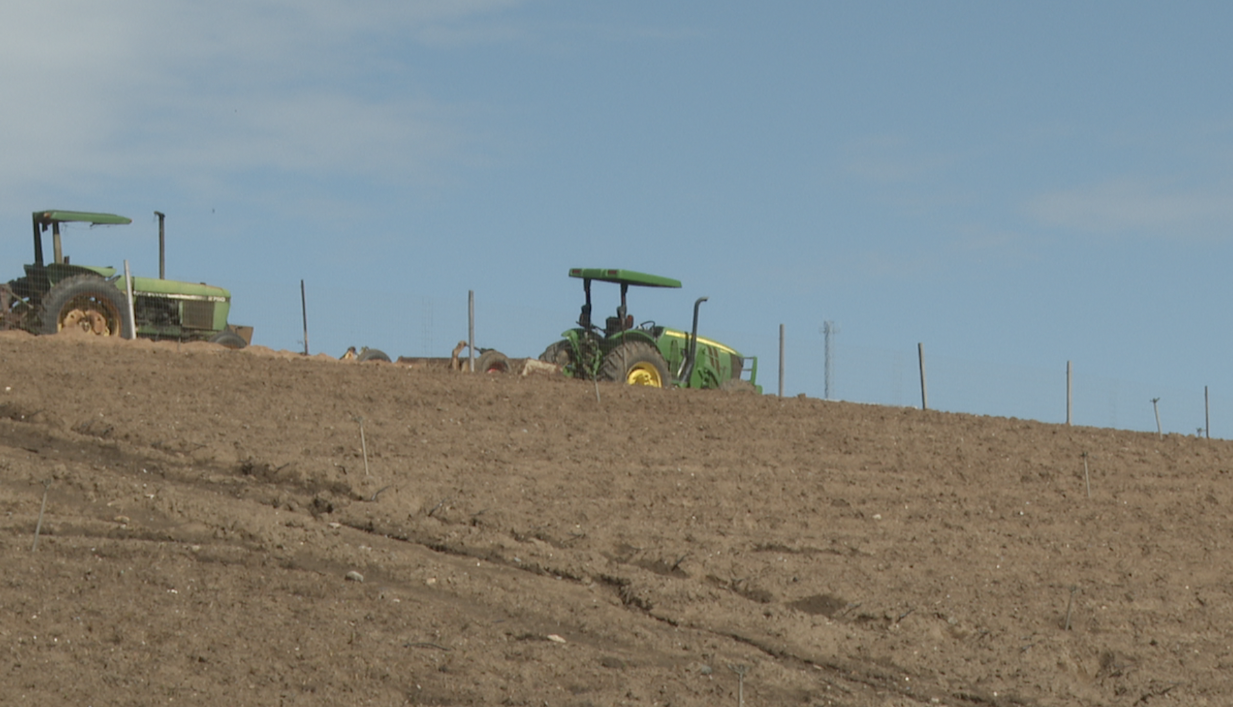


OCEANSIDE, Calif. (KGTV) — Forty percent of farmers are scaling back field work because of diesel costs, according to a new California Farm Bureau survey of more than 1,000 farmers and ranchers.
The Iran war has sent the price of diesel fuel to record highs, adding to the financial pressures squeezing California growers.
The price of diesel in San Diego is currently $8.37, according to AAA. The price has risen 16 cents since last month and more than $3 since this time last year.
Neil Nagata is a third-generation farmer, and his family has been on his Oceanside farm for the past 100 years. He showed me around the property as he described the mounting costs.
"There's a 160 acres here. Only a few acres of strawberries and a few acres of blueberries and then cherimoyas and everything else we do," Nagata said.
Diesel costs are just one of the financial pressures squeezing farmers like Nagata.
"Right now we're dealing with a lot of the diesel prices and the additional costs for fertilizer and things like that, and it's been a substantial burden. We're looking at about 67% increase since February. And about an 87% increase since uh one year ago in September," Nagata said.
Nagata told ABC 10News diesel is used for things like fueling his tractors, generating electricity, and transporting his strawberries, blueberries and cherimoyas to market.
"We've been in business for over 100 years and you know we're just trying to stay one more year. We're we're trying to be optimistic. It would be wonderful if we can just even reduce some of the regulatory burdens that we're facing," Nagata said.
A California Farm Bureau survey of more than 1,000 farmers and ranchers showed that three out of four farmers report increased financial stress from diesel prices.
For Nagata, he's hoping his business survives amid the competition.
"We are always conscious about how to, uh, be as economically feasible as possible so it's gonna be difficult, you know, we expect that, uh, maybe prices will increase but like I said, you know, we have global competition. Our, our biggest competitors right across the border here uh in Baja California in Mexico," Nagata said.
This story was reported on-air by a journalist and has been converted to this platform with the assistance of AI. Our editorial team verifies all reporting on all platforms for fairness and accuracy.
