

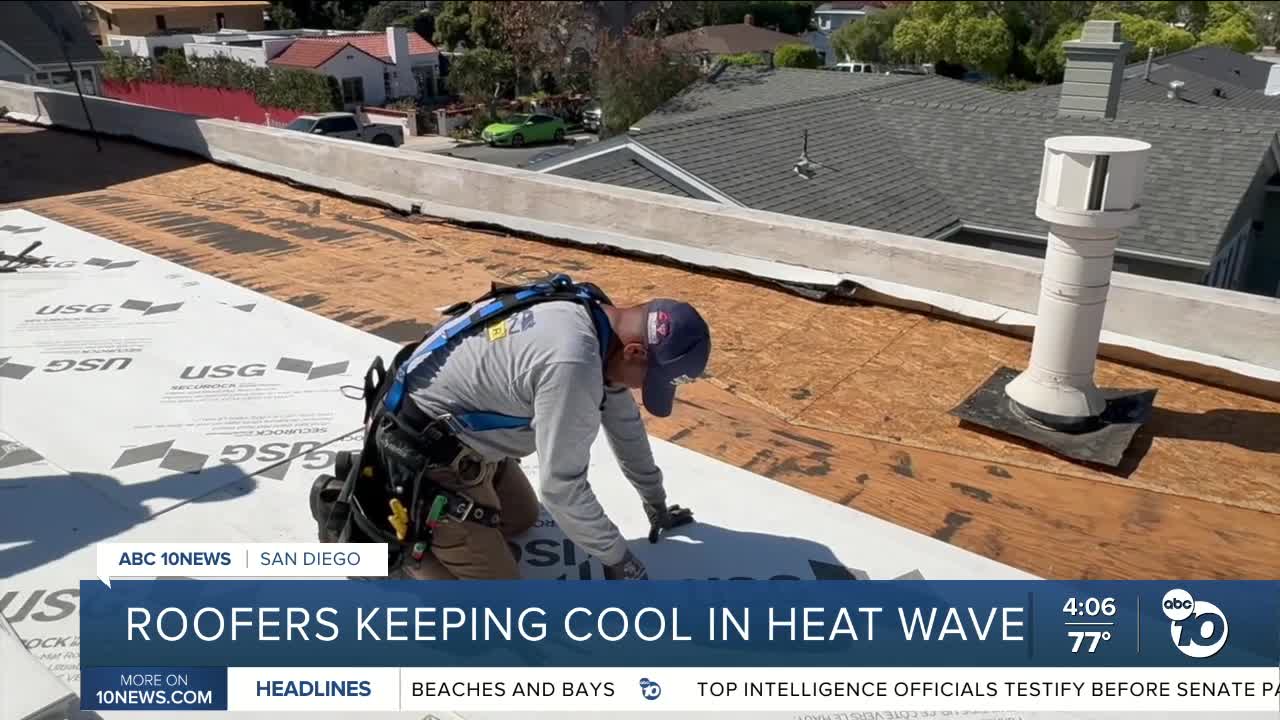


SAN DIEGO (KGTV) – When you think of La Jolla, you think of the beach. But people working in the heat don't have the luxury of the ocean.
“It seems like people during this time of year always want to get their roof work done,” Riley Logsdon, Vice President of Dana Logsdon Roofing & Solar, said.
This time of year, rather, this week in particular, feels like summer.
“The asphalt, like on the ground, on the roof, same thing if you're stepping on it on a hot day, you can actually feel the, the sole of your shoe start to melt off,” Logsdon said. “So, we really want to make sure we're protected from the heat of the roof and the heat in the air.”
ABC 10News met with Logsdon and his crew at a job site in La Jolla on some of the steps they take to stay cool while roofing, like pop-up tents.
“It makes a huge difference, one, because they're under the shade, so they're not in the direct sun, and two, they're not getting that reflectiveness back,” Logsdon said. “Our guys are going under there every at least 30 minutes, making sure they're staying hydrated, electrolytes, and just staying cool because we think an ounce of prevention is worth a pound of cure.”
Logsdon told ABC 10News they work with different materials while working on the roof. One material can make the roof feel 15 to 20 degrees hotter for crews working up there.
Another piece of material that’s installed is great to reflect the sun off the roof, which can almost be like snow, giving you that blinding effect while working with the material.
“We're not only having to think about the heat but also the reflectiveness and protecting our skin from sunburns as well,” Logsdon said. “So it's something we take very seriously, making sure our guys are protected from their skin, but the most dangerous thing about it is helping them avoid heat stroke or heat exhaustion because that's when it gets really dangerous.”
The roofer said a crew leader is always on-site making sure people are taking those breaks, staying hydrated, and protected from the heat. This week’s recent heat wave also helps crews prepare for the summer when the temps can ramp up more often on the roof.
“This definitely helps our guys transition from those winter months when they can just work all day long into the summer months when you really have to be strategic about what hours are we working,” Logsdon said. “You don't want to be up there working during the hottest time of the day because it's just going to be brutal. You're not going to get as much done. You have all these risks.”
