

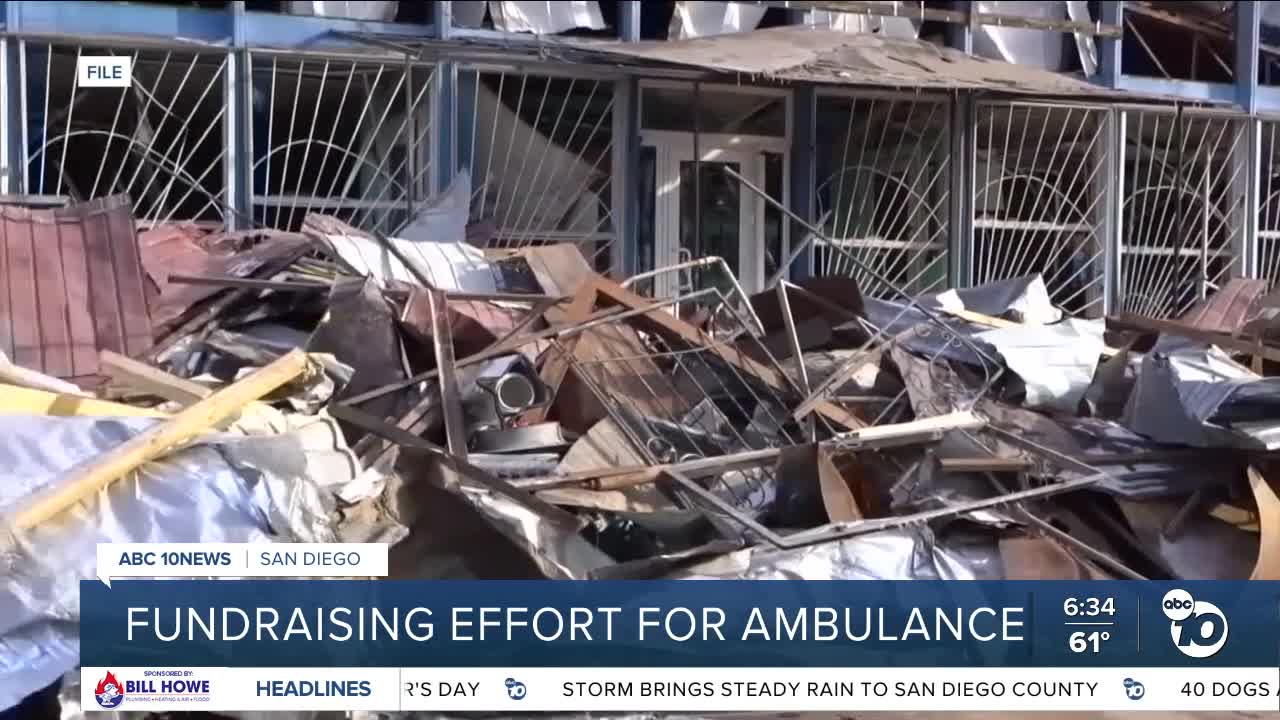


SAN DIEGO (KGTV) – As the peace negotiations continue for the Russia-Ukraine war, one local non-profit isn’t stopping those on the front lines.
“One of the things that is really in huge demand is vehicles, especially ambulances and evacuation vehicles,” Josh Levine, Director of Operations for Shield of Freedom, said.
Levine is with Shield of Freedom, which is a local non-profit that provides resources to Ukrainians on the front lines, said these vehicles are becoming targets in the war.
“A lot of them are getting blown up. The roads are terrible. They have these issues with drones, and so we've got requests from now 2 units from Ukraine that are evacuating not just soldiers but also civilians and first responders,” Levine said.
So the non-profit’s president, Mira Rubin, said it’s doing a fundraising campaign to meet that demand.
“This end of the year giving for Shield of Freedom, we dedicated to a fundraiser to these ambulances, and we have a couple ambulances that we already have found, you know, in Eastern Europe that we will be moving to Ukraine, as soon as this fundraiser is over,” Rubin said.
And you might be wondering where you might find an available ambulance thousands of miles away.
“They take an SUV like this and they turn it into the MedEvac. So we're not often we're not even buying legitimate, you know, $50,000 ambulances,” Rubin said. “We're just getting them vans ,you know, eight, nine, $10,000 dollars vans that they put in,you know, beds in them, and they turn them into ambulances, so they retrofit a regular vehicle into an ambulance.”
Shield of Freedom is aiming to raise $20,000 for the cause.
“We have a matching donor who is matching every donation until December 31st,” Rubin said.
Rubin said the donations for the ambulance fund can come in after the 31st as well.
It’s a resource we all take for granted if we get hurt and need to call 911.
But, especially on a battlefield, it can mean life and death.
“When I was serving in Afghanistan, we had something called the golden hour, where if you could get someone to treatment within an hour, their odds of survival or saving a limb or something like that are huge, they are so much higher,” Levine said. “Once you get to those kind of late stages, your odds of survival or your odds of keeping your limbs go way down, and that's why these vehicles are so important.”
