

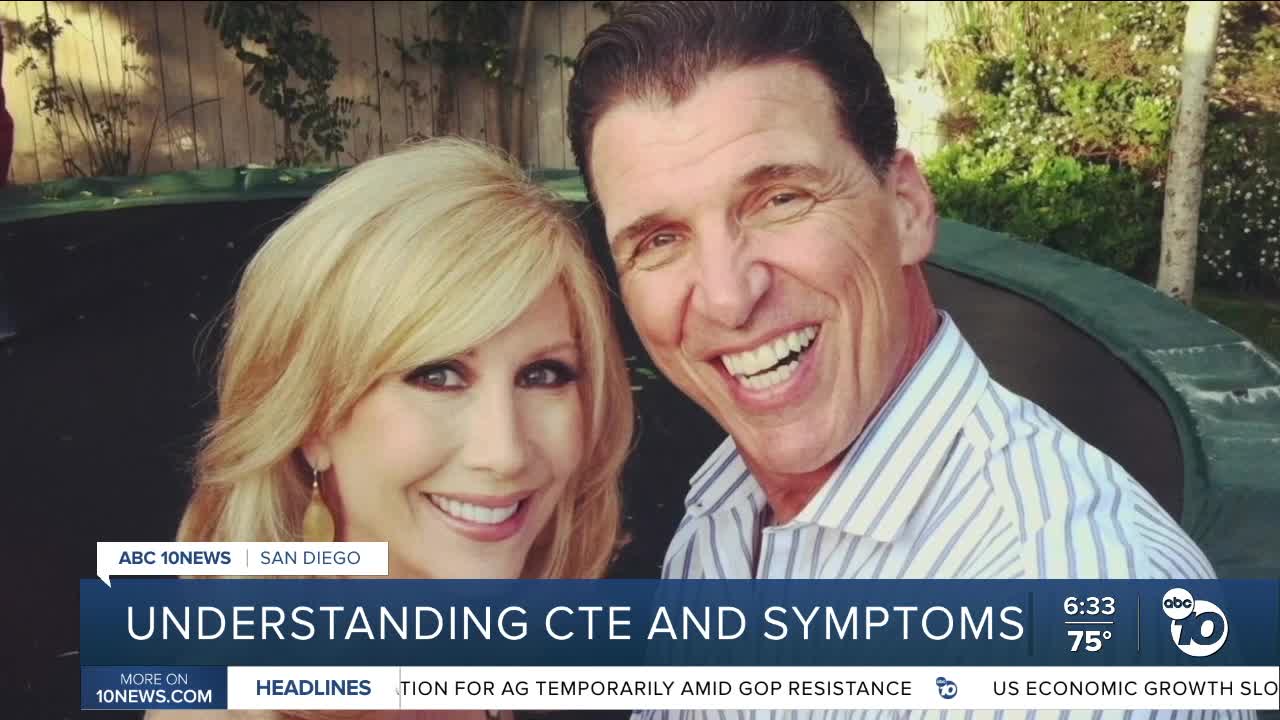


SAN DIEGO (KGTV) — Billy Ray Smith Jr., a San Diego Chargers legend and ABC 10News personality, had dementia caused by chronic traumatic encephalopathy, known as CTE, his family confirmed following his passing.
His family released a statement saying, "Billy Ray faced his long journey with dementia caused by CTE with unmatched bravery, dignity, and strength."
CTE is a neurodegenerative brain disease linked to repeated head trauma.
Dr. Vamsi Chavakula, a Neurosurgeon with Sharp HealthCare, explained what happens to the brain.
“We believe it is a neurodegenerative condition. And the current belief is, is it formed by repetitive trauma, and not necessarily high-speed head trauma, but almost low speed subclinical micro traumas," Gooding said.
“Could the buildup or cumulative effects of those micro traumas lead to progressive neurodegeneration and brain damage.”
Essentially, brain tissue and nerve cells die and cannot be repaired.
While CTE has been linked to several major sports, it is most frequently discussed in connection with football.
A study from Mass General Brigham and Boston University released in July found NFL players are four times more likely to die due to neurodegenerative disease.
“This is the clearest population-level evidence we have ever had that NFL players are dying due to neurodegenerative disease at real and measurably higher rates,” said co-senior author Daniel Daneshvar, MD, PhD, Chair of Physical Medicine and Rehabilitation at Mass General Brigham and Harvard Medical School and director of the HealthSpan Lab. “This study demonstrates that, when looking at athletes who have played in an NFL game, including nearly 20,000 players, across every official cause of death, the result is the same: NFL players are dying of dementia and Parkinson’s disease three to four times more often than they should.”
Diagnosing CTE presents a significant challenge. Despite recognizable symptoms — including memory loss, mood changes, trouble walking and loss of bodily control — CTE can only be definitively diagnosed after death.
"The imaging modalities that we have, the magnetic resonance, the CT scans, as good as they are, and as good as they've become since they've been developed, they still don't have the resolution to really isolate these proteins and this abnormal buildup," Chavakula said
Smith is donating his brain to Boston University's CTE Brain Bank, with the goal of protecting future athletes.
A celebration of life for Billy Ray Smith Jr. will be held at the Rock Church in Point Loma on Saturday, Aug. 22 at 2 p.m. The public is welcome to attend.
