

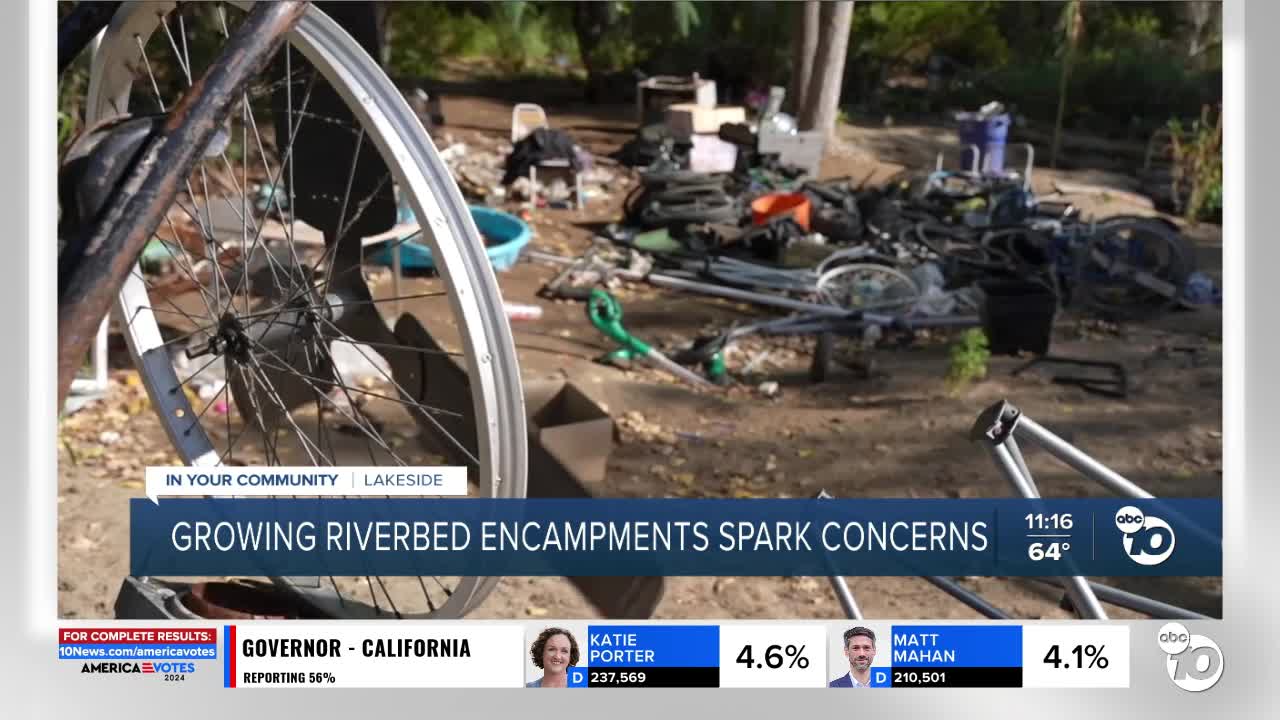


LAKESIDE, Calif. (KGTV) — Piles of trash, propane tanks, gas cans, bicycles, clothing and even a wood-burning stove have been removed from homeless encampments along the San Diego River in Lakeside, but local officials say the problem continues to grow.
The Lakeside River Park Conservancy says it has identified eight homeless encampment sites along the river, with some expanding to a size and scale they say they have never encountered before.
"Until you experience it for yourself, you really have no idea what is down here," said Robert Doty, field superintendent for the Lakeside River Park Conservancy.
Doty recently walked through one of the largest encampments the organization has seen during his 15 years working along the river.
"The size and the scope and the depth of this is nothing like I've seen before," Doty said.
The conservancy has been working to remove debris from the sites, but leaders say the amount of waste has become overwhelming. In May, the organization partnered with volunteers from I Love A Clean San Diego to remove 2.5 tons of trash from the area.
"I was floored at the sheer volume of material that is down here. It is breathtaking," Doty said.
Despite the cleanup effort, officials say the work only addressed a fraction of the problem.
"The more the trash accumulates and the more the waste accumulates, the more hazardous the encampments become over time," said Julie Turko, CEO of the Lakeside River Park Conservancy.
Among the items discovered were propane tanks, gas cans, barbecue equipment and a wood-burning stove — all located in an area surrounded by dry vegetation.
"We found a wood-burning stove. We found propane tanks, gas tanks. We found a barbecue," Turko said.
Conservancy leaders worry those materials could fuel a dangerous wildfire, especially in the riverbed where access to water is limited.
"There's no hydrant, there's no faucet, there's nothing to pump water on it if it gets out of control," Doty said. "Once the fire goes in the riverbed, it works as a conduit to go further for other places."
The San Diego County Sheriff's Homeless Assistance Resource Team, known as HART, has also been involved, helping connect people living in the encampments with services and housing resources.
As concerns grow, the Lakeside River Park Conservancy plans to meet with community members to discuss possible long-term solutions. Officials say future cleanup efforts may require specialized equipment to safely remove the growing amount of debris.
"It really isn't safe for crews to hand-pull all of the trash out of the site," Doty said. "We're really looking for ways to mechanize this to ensure our crew's safety, to ensure our partners' safety, but also to work more efficiently."
Conservancy leaders say they hope community discussions will help determine the next steps in addressing both environmental concerns and the challenges surrounding homelessness along the San Diego River.
