

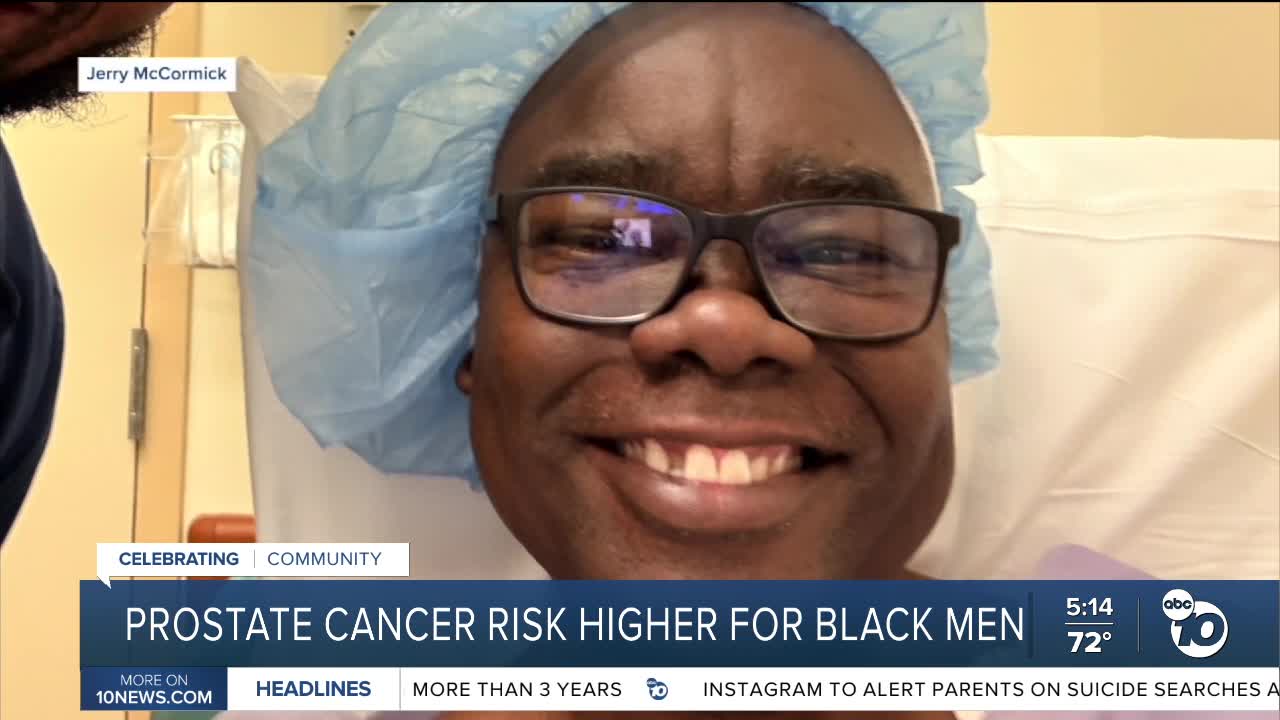


SAN DIEGO (KGTV) — In honor of Black History Month, a prostate cancer survivor and local health leader is drawing attention to alarming disparities in prostate cancer diagnoses and deaths among Black men in San Diego County.
For Jerry McCormick, the diagnosis came unexpectedly.
“At 57, I never thought cancer was even a possibility,” McCormick said.
McCormick said he went to his primary care physician last summer for bladder and blood pressure issues. His doctor recommended a prostate-specific antigen, or PSA, test. The results changed his life: Half of his prostate was cancerous.
Within days, McCormick was meeting with a surgeon. He chose to have his prostate removed and later underwent a second major surgery.
“You think you’re done, but you’re not,” McCormick said. “Cancer can hide and come back. A lot of Black men are caught by surprise.”
The prostate, a walnut-sized gland central to men’s reproductive health, is vulnerable to one of the most common cancers among men. Nationally, about one in eight men will be diagnosed with prostate cancer.
For Black men, the risk is higher — about one in six.
According to the National Cancer Institute, nearly 2,000 new prostate cancer cases are diagnosed each year in San Diego County.
Dr. Rana McKay, Associate Director of Clinical Sciences at the Moores Cancer Center with UC San Diego Health, said some communities, including parts of the South Bay and Carlsbad, experience the county’s highest prostate cancer death rates. Del Mar and Mid-City report some of the lowest.
McKay said the disparities may reflect barriers to access, including limited screening, delayed treatment, and gaps in health care coverage.
“Mortality rates in San Diego County are higher than both the state and national averages,” McKay said. “That suggests there is more work to do when it comes to prevention and early detection.”
There is good news, however.
McKay said prostate cancer is highly treatable when caught early. Over the past two decades, she said, the mortality rate among Black men has dropped by about 50%, largely due to improved screening and treatment.
McCormick credits early testing with saving his life.
After attending a prostate cancer seminar, he partnered with McKay to help launch a support group aimed at men of color and younger patients who may feel isolated after diagnosis.
“For men like Jerry, their age, their background, their experiences — those things matter,” McKay said. “We want support systems that reflect that.”
The group is still developing, but its mission is clear: encourage early screening and open conversations about men’s health.
Current guidelines recommend that Black/ African American men begin prostate cancer screening around age 45, earlier than the general population.
McCormick said that a single appointment can make a life-changing difference.
“The earlier you get tested, the faster you can get help,” McCormick said. “Please go get tested. Please go get tested.”
