

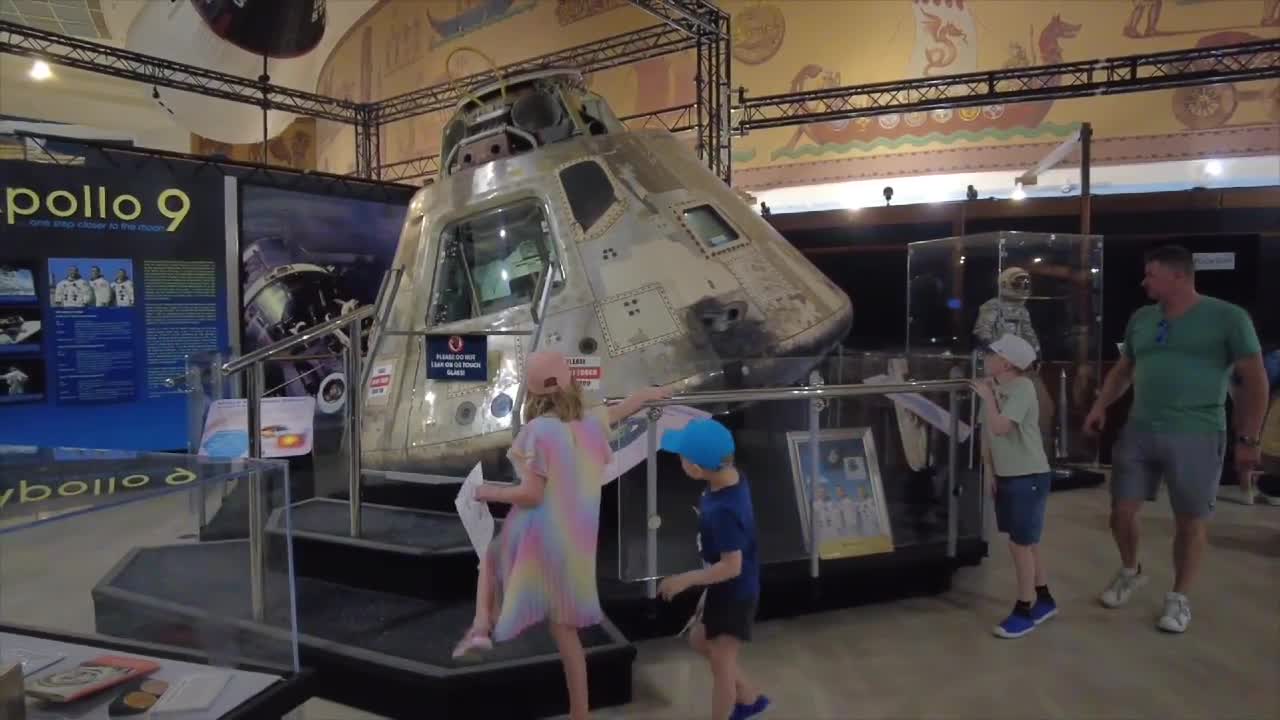


SAN DIEGO (KGTV) — As the world awaits a historic splashdown, one San Diego museum is taking a moment to look back at the milestones that made it all possible.
Inside the San Diego Air & Space Museum, history comes to life—offering visitors a hands-on look at what life in space has looked like over the decades. From astronaut suits to space food, the exhibit blends education with a sense of wonder.
“You can see what astronauts wore, what they ate—and even how they worked in space,” said ABC 10News reporter Tali Letoi.
Walking through the exhibit, it’s more than just artifacts on display—it’s a glimpse into the evolution of human spaceflight.
Standing next to an Apollo exhibit, Letoi spoke with museum CEO Jim Kidrick about why reflecting on the past is so important, especially as the space community looks ahead to a major milestone.
“And so I think there's a lot of excitement as we get back out there—and in a weird sort of way, we're back in the game,” Kidrick said.
That excitement is building, particularly with a new generation of missions on the horizon.
“It’s going to test everything—brand new capsule, brand new rocket, brand new everything,” Kidrick added. “This is a test flight above all others.”
The upcoming splashdown marks a significant moment—the first of its kind in more than half a century—signaling a new chapter in space exploration.
“A long overdue moment,” Letoi noted.
Kidrick says the difference between then and now is staggering.
“They didn’t have as much technology as we have in our cell phone,” he said. “Now they’ve got the kind of technology that’s going to make a significant difference… giving us the ability to continue that exploration and find answers.”
Throughout the museum, that journey is documented in detail. Historic artifacts—including a helmet worn by Neil Armstrong and a letter written by Charles Lindbergh—offer a tangible connection to the pioneers of flight and space travel.
“We have lots of key artifacts that give us that glimpse of the past, but also excite us about the future,” Kidrick said.
And while today’s missions may seem groundbreaking, Kidrick says they’re built on a foundation laid decades ago.
“There isn’t anything Artemis is doing right now that hasn’t been done by Apollo,” he explained. “They’ve already landed on the moon multiple times. The Artemis program is now resurrecting that knowledge.”
But this time, the goals are different.
“Now it’s about staying out there—learning how to exist in deep space,” Kidrick said.
As visitors walk through the exhibits, the message is clear: the past isn’t just history—it’s a stepping stone.
When asked what he hopes people take away, especially young visitors eager to learn about space, Kidrick had a simple answer:
“You can do it. It’s your turn. Get back out there.”
