

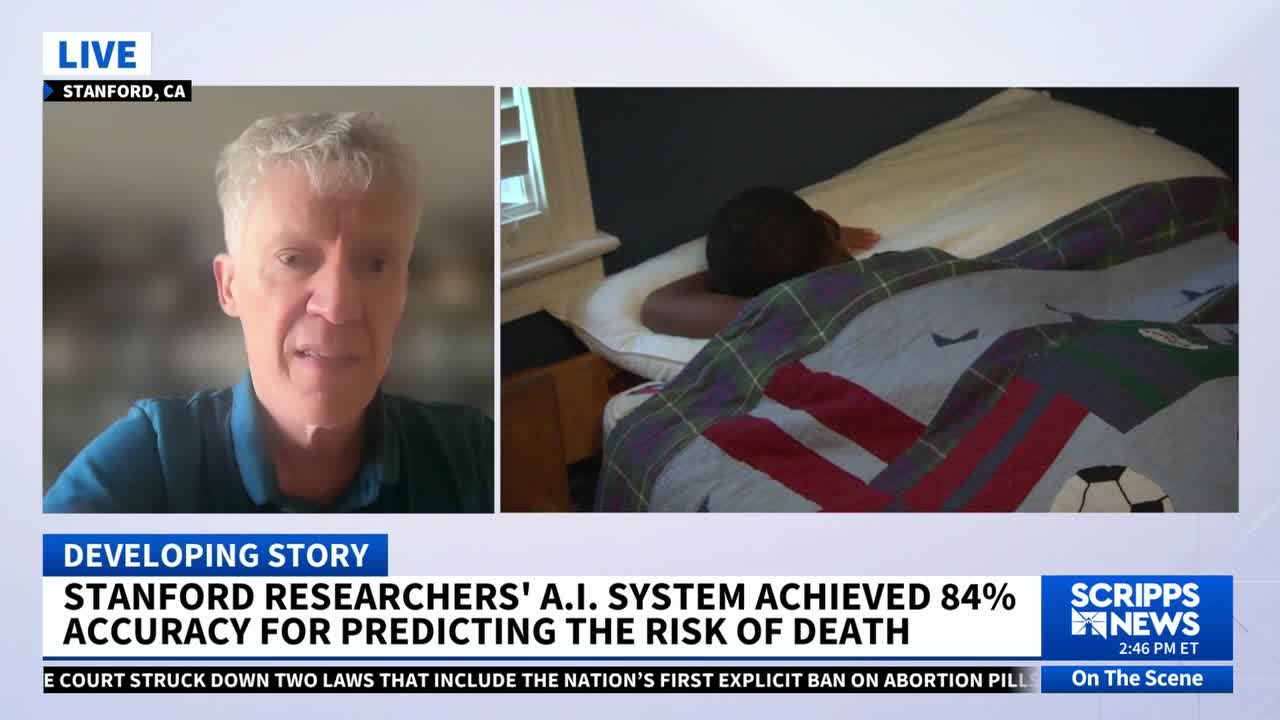


Researchers at Stanford University have developed an artificial intelligence system that can forecast a person’s risk of developing certain diseases — and even death — by analyzing data from just one night of sleep.
The research team examined sleep recordings from more than 65,000 people for the study, introducing their SleepFM AI tool, which they said can accurately predict risks for 130 diseases years before diagnosis.
RELATED STORY | National Sleep Foundation finds lack of sleep leads to teen depression
"We record an amazing number of signals when we study sleep,” said Emmanuel Mignot, professor of sleep medicine at Stanford University and a co-author of the study. "It’s a kind of general physiology that we study for eight hours in a subject who’s completely captive. It’s very data rich.”
The AI analyzed more than 585,000 hours of sleep data from participants ranging in age from 2 to 96. Researchers said the system exceeded 80% accuracy in identifying potential risks, including cancer, pregnancy complications, circulatory conditions, mental disorders, Parkinson's disease and dementia.
IN CASE YOU MISSED IT | OpenAI collaborates with physicians to improve ChatGPT's mental health response
“From an AI perspective, sleep is relatively understudied," said co-author James Zou. "There’s a lot of other AI work that’s looking at pathology or cardiology, but relatively little looking at sleep, despite sleep being such an important part of life."
Watch Scripps News' interview with Mignot and Zou, co-authors of the study, in the video player above.
WATCH | Real vs. fake: Can you spot AI generated images?
