
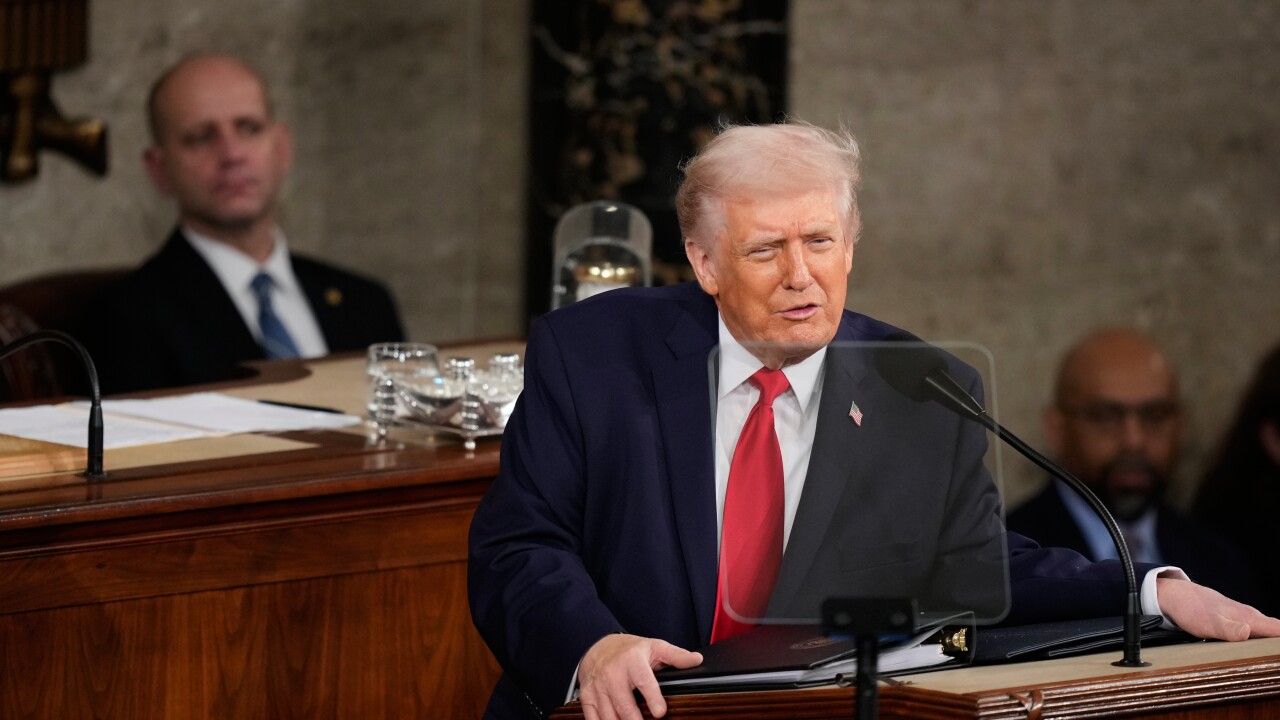


During his State of the Union address Tuesday, President Donald Trump touted using tariffs as a way to eventually eliminate income taxes, prompting applause from many Republicans inside the Capitol.
"It's already time-tested and approved, and as time goes by, I believe the tariffs paid for by foreign countries will, like in the past, substantially replace the modern-day system of income tax, taking a great financial burden off the people that I love," Trump said.
But how realistic is it for the U.S. government to collect more than $2 trillion a year in tariffs to replace income taxes? Vanessa Williamson, a senior fellow in governance studies at the Brookings Institution, said Trump’s proposal is unlikely to benefit most Americans.
RELATED STORY | Trump's State of the Union address puts focus on tariffs, immigration and foreign policies
“The United States used to rely almost exclusively at a federal level on tariff revenue — and Americans hated it. That is the reason we have an income tax today, because tariffs raised prices for consumers. People knew it would make taxes fairer because it would be linked to your ability to pay,” she said.
Although Trump has suggested foreign governments pay tariffs, in reality companies pay them when goods are imported. Many firms say those costs are passed along to consumers in the form of higher prices.
"The cost of the tariff falls on consumers and on poorer people, and the income tax falls on richer people more than on poorer people," Williamson said. "It's just a fairer way to raise taxes."
RELATED STORY | These are the new tariffs Trump started after Supreme Court limited his authority
Last week, the Supreme Court ruled that the International Emergency Economic Powers Act does not give Trump authority to impose tariffs. He implemented new tariffs citing Section 122 of the Trade Act of 1974.
