



SAN DIEGO (KGTV) — It was a strong start to the year for California, the state reporting zero areas of abnormal dryness for the first time in 25 years.
At first glance, that pointed to a potentially calmer fire season in a state that sees more wildfires than any other.
But March quickly changed that. San Diego is coming out of the hottest March on record, breaking a historic 16-day stretch of heat, with more than 100 daily temperature records broken or tied.
"We did have that higher temperatures and lower humidity a rather early time frame of the fuels drying, but now that temperatures are kind of going back to average we'll probably fall into those little normal or abnormal drought conditions," Oscar Costello, Public Information Officer for Cal Fire says.
That now means vegetation is drying out faster, creating more fuel for fires and potentially speeding up the start of fire season.
"We'll see those fuel moisture drop down and we'll see a lot of the green grass turn brown," Costello says.
So far this year, the county has seen 29 vegetation fires, slightly down from 37 this time last year.
And if you’ve noticed smoke in the distance recently, it may not be a wildfire at all.
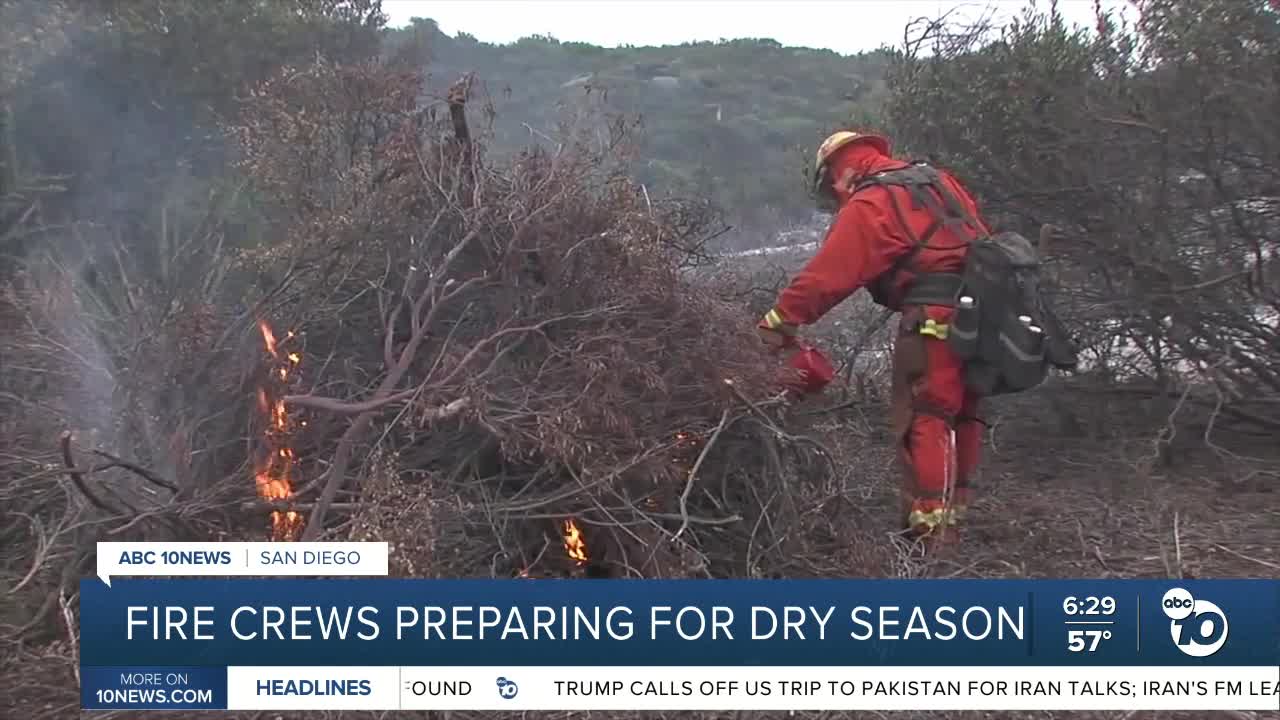
It could be a prescribed burn. These controlled fires are intentionally set to clear out dry brush, dead vegetation, and other materials that could easily ignite.
Areas that haven’t burned in years can build up dangerous fuel, making them more vulnerable when a fire does spark.
"Crews go out there, gather the material, or make a defensible area for that fire to burn, and then when the time is correct, they'll initiate that prescribed burn," Costello explains.
Last year, San Diego County treated more than 600 acres through prescribed burns. This year, crews are working to do even more, as the state pushes toward a
Fire crews are also expanding community protection efforts, clearing vegetation near homes and creating buffer zones to help slow or stop fires before they spread.
