

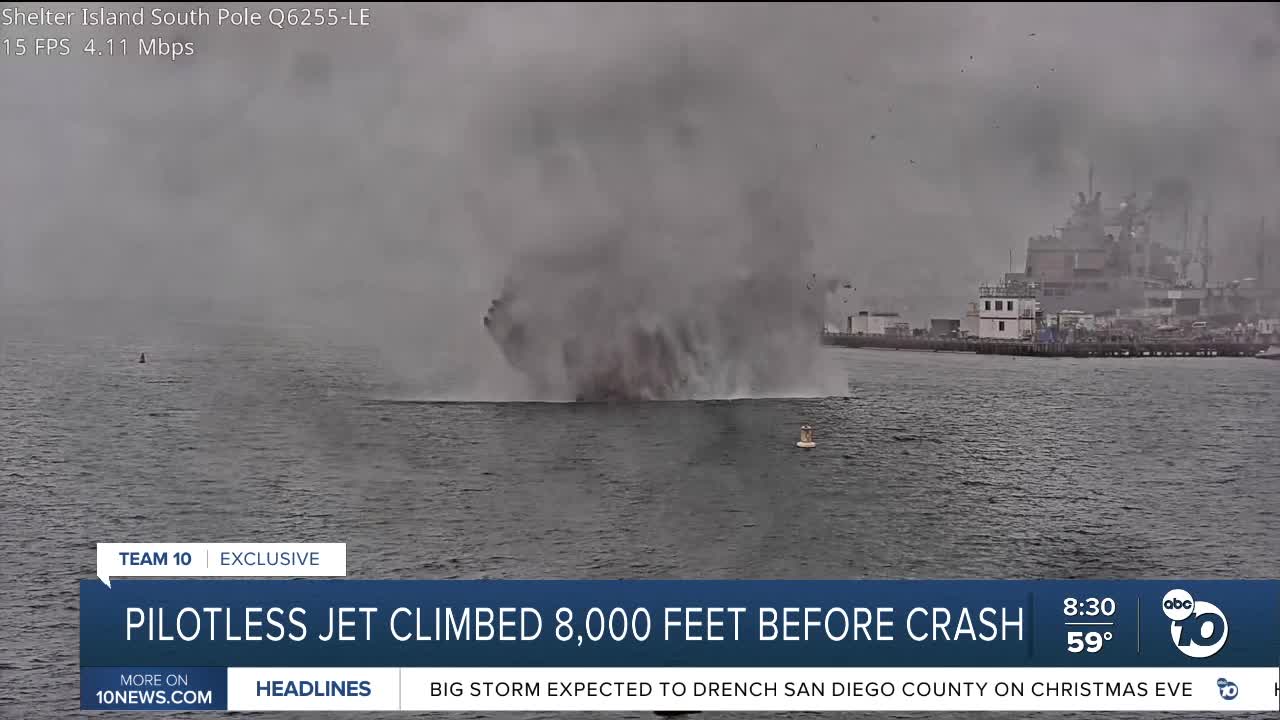


SAN DIEGO, Calif. — A Navy jet that crashed into San Diego Bay within striking distance of homes, hotels, and restaurants had climbed to about 8,000 feet in the air with no one on board after its pilots ejected following a failed landing in February, Team 10 has learned.
And now documents obtained through a Freedom of Information Act request from the recently completed investigation into the accident are shedding new light on the chaotic moments leading up to the crash of the $67 million EA-18G Growler.
They reveal concerns about runway conditions, a fuel leak midair, and a warning from air traffic control that created confusion in the cockpit.
According to the records, the pilot felt something was wrong with his brakes moments before the mishap.
On the day of the accident, the pilot and the electronic warfare officer in the backseat had to get into a spare jet due to a fuel leak.
The crew took off from North Island and joined a tanker to refuel midair. They had a “minor leak from the basket” and decided to return to base rather than risking being more than 500 miles off the coast.

As they prepared their descent, the crew was told there was water on the runway at North Island.
The pilot landed but was up against tailwinds and higher-than-normal speeds. He told investigators, “I knew I would have to get on the brakes a bit more.”
He said as he applied them, he noticed the brakes felt “mushy or at least a bit different than normal.”

Fearing the jet wouldn’t stop in time, the pilot started a go-around maneuver. Then a tower controller warned, “Not enough runway.”
“This was said in a very concerned voice, which caused some confusion and concern,” the pilot said.
'Eject! Eject! Eject!'
Retired Air Force accident investigator Rich Martindell said he was surprised the air traffic controller made that warning and thought it was inappropriate.
“The tower wasn't in a position to really know the aircraft's speed and what the whole situation was,” he said in an interview.
Martindell, who has flown the F/A-18 Super Hornet fighter jet, a similar aircraft that lacks the Growler’s electronic warfare gear, said the controller couldn’t have known how much runway was left.
“It clouded the issue and caused the crew to have more doubt about the situation.”
The pilot told an investigator moments after having issues with the brakes, “It felt like the jet was not going flying and the water was approaching, so I called for ejection with ‘EJECT, EJECT, EJECT’ and then we pulled the handles,” his witness statement shows.
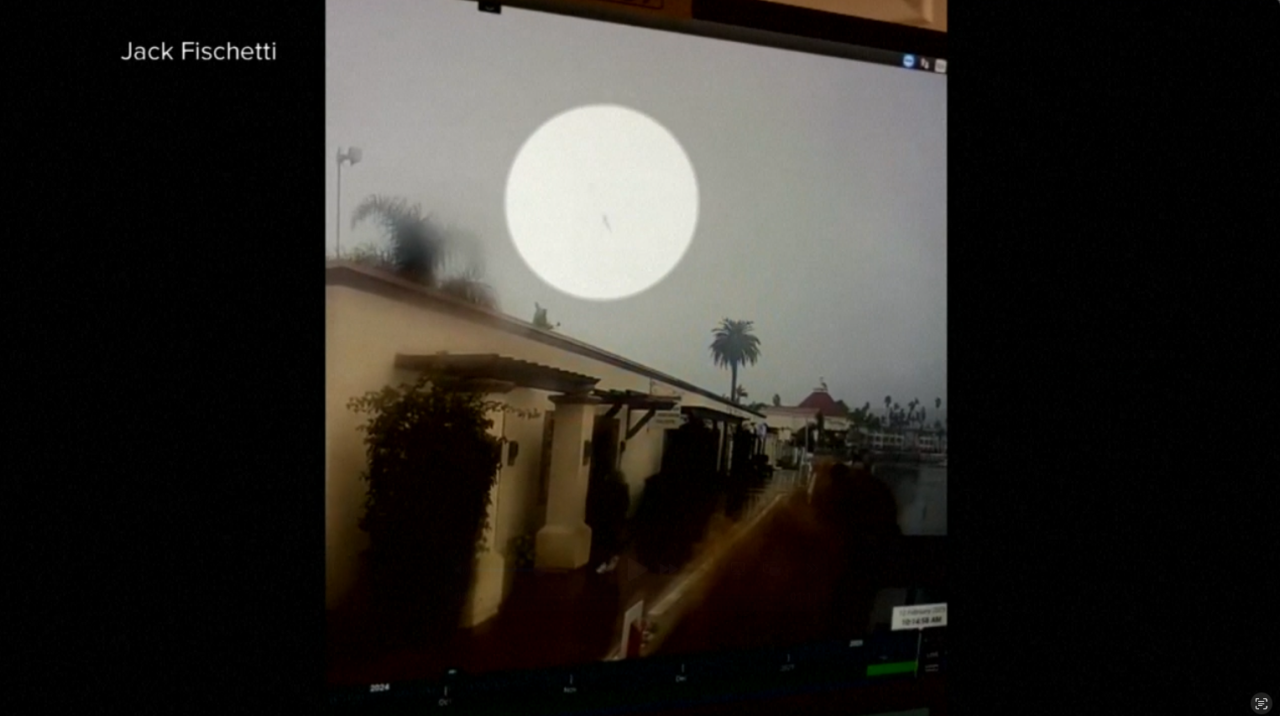
The crew safely parachuted into San Diego Bay and were rescued by a fishing boat.
The jet continued to climb to roughly 8,000 feet before dropping for over a minute and crashing into San Diego Bay near Shelter Island, the Navy investigation found.
“It looks like what it did is stalled. So, it got nose high, ran out of airspeed, came back around, and then the video we see of it going into the water, nose first, just all happened after the ejection,” said Martindell.

The Growler’s chaotic drop from the sky was captured on a resident’s doorbell and nearby surveillance cameras, which showed it nose-diving into the bay.
“If this aircraft had continued on even a second more, it could have hit Shelter Island or flown into a populated neighborhood in Point Loma — very, very close to a tragedy,” retired U.S. Marine Corps Col. Steve Ganyard told ABC News after the crash.
Navy says human error, weather to blame
After Team 10 obtained the documents, the Navy confirmed in October that it had finished the investigation into the mishap and ruled out mechanical failure.
Instead, investigators determined the crash was caused by human error exacerbated by a combination of factors, including adverse weather.
“The aircraft was unable to safely stop on the runway due to wet runway conditions and landing with a tailwind. The investigation determined that the pilot should have instead executed maximum braking techniques,” said Navy Cmdr. Amelia Umayam, a spokesperson for Naval Air Forces, U.S. Pacific Fleet.
The Navy spent weeks recovering debris from the water and said roughly 85% of the aircraft was recovered including significant debris.
“The U.S. Navy has well-established and rigorous programs for crew resource management, adherence to training rules, professionalism and airmanship,” Umayam wrote in a prepared statement.
“In the days and weeks that followed the crash, leadership across the enterprise reinforced to all crews that strict adherence to these programs is critical to safe and effective flight operations.”
Martindell still believes the air traffic controller’s warning was a contributing factor in the mishap and may have altered the pilot’s decision-making in the final moments before the ejection.
“He may have made a different decision I'm sure that that call had some influence on his decision to call for the ejection.”
Team 10 Investigative Reporter Austin Grabish covers military investigations, the Medical Board of California and the U.S.-Mexico border. If you have a story for Austin to investigate, email austin.grabish@10news.com
