



SAN DIEGO (KGTV) — In California, water is becoming harder to come by, forcing some farms to scale back or stop planting altogether.
But in San Diego county, one farm is growing a crop that uses way fewer resources in the process. That crop being mushrooms.
Roberto Ramirez walks us through the multi-step growing process of them, from compost to controlled rooms where mushrooms quite literally grow in the dark.
At peak production, the farm can produce up to 5,000 pounds of mushrooms a week using, at most, about 5,000 gallons of water.
“When you talk about other crops, it's a much higher number, so we are able to show ourselves that we're very sustainable,” Ramirez explains.
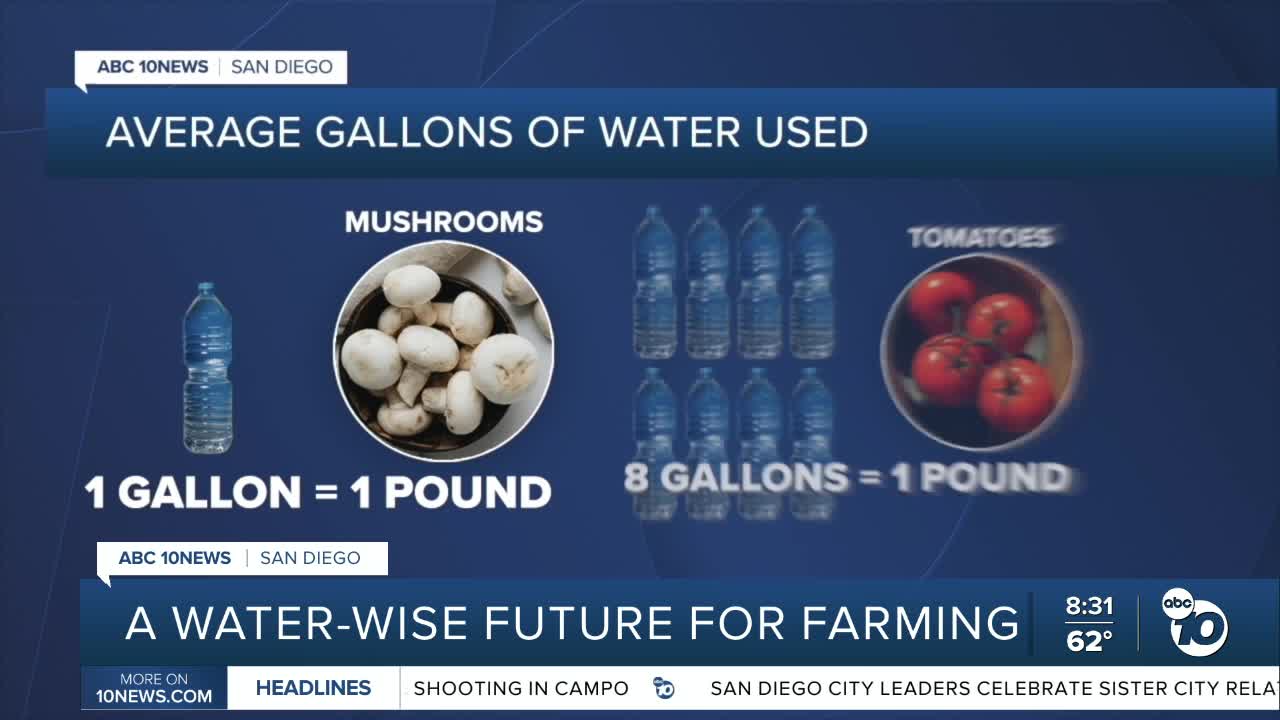
To put his thought into perspective; It takes about one gallon of water to grow one pound of mushrooms. Compare that to roughly eight gallons for a pound of tomatoes.
It’s a decision Ramirez thought carefully about when he bought the farm in the early 2000s, during one of California’s worst drought periods, years before major statewide water restrictions took hold.
“Compare that to other people like avocado farmers, they had to reduce 30% of their usage, which meant cutting back 30% of their water…” Ramirez says.
But for mushrooms, water cuts have never been part of the equation.
And as demand grows, especially for specialty and medicinal varieties, Roberto says he sees a future where more California farms could follow suit.
Ramirez says he wouldn’t be surprised if more farmers in California follow suit and enter the mushroom farming business.
“Now we’re seeing more and more small growers. But we're still the only one mushroom farm that grows white mushroom cremini mushrooms in San Diego,” Ramirez says.
But sustainability here doesn’t stop at water.
His farm also gives back through its compost program, recycling spent mushroom substrate into soil.
“Instead of going to the landfill where it will just be sitting there and not doing anything, they bring it here,” Ramirez explains. When they’re done using their compost for their mushrooms, they give it away for people in the community.
He calls it “an endless loop”.
A loop that doesn’t just help grow mushrooms, but could help grow a more sustainable future for California farms.
