

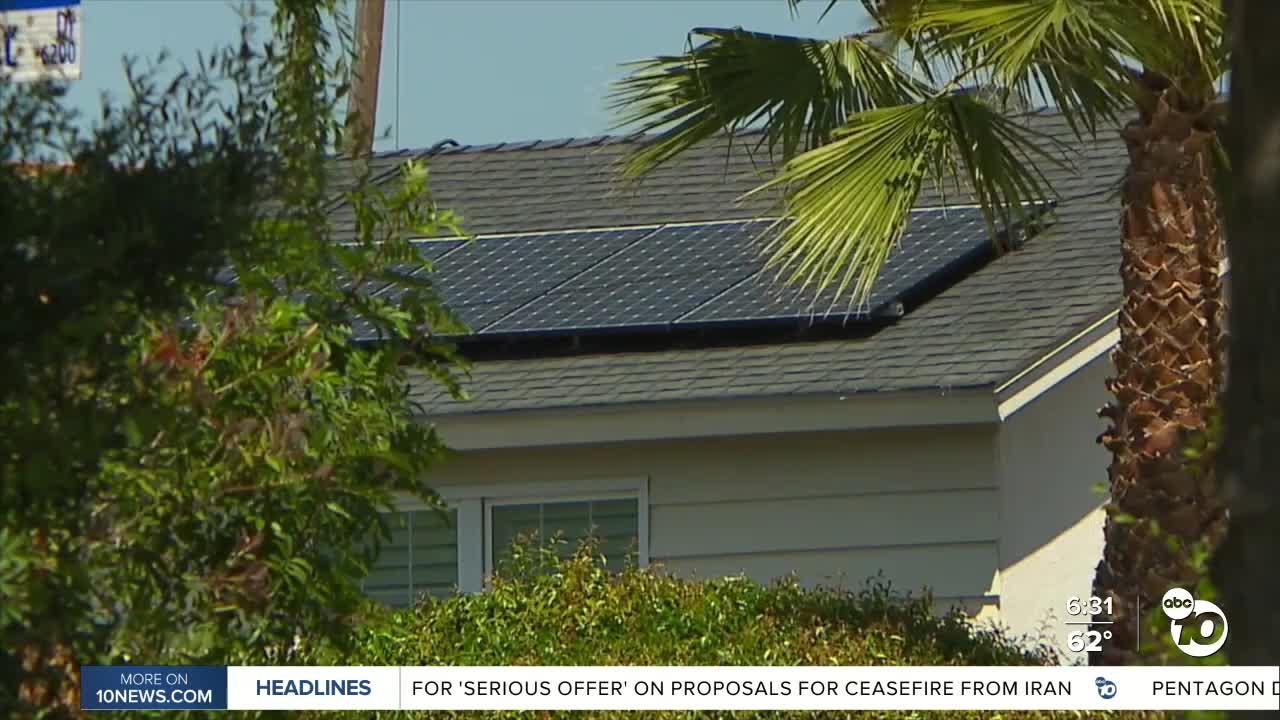


SAN DIEGO (KGTV) — Natural gas still provides more electricity in California than any other source, but the balance is starting to shift.
“Solar power has been growing a lot in the last, let's say 10 years, mostly, and it's been growing so much actually that now we have too much of a 'good thing'," Jan Kleissl, Director of the Center for Energy Research at the University of California, San Diego, says.
That “good thing” is solar energy, especially during the middle of the day.
But here’s the problem energy experts have pointed to for years…When solar output is highest, electricity demand is actually lower.
Then, as the sun goes down… demand rises again. That mismatch creates what’s known as the “duck curve” — too much energy at midday and not enough when people actually need it.
So if solar peaks when we don’t need it and fades when we do…how is California using it at night?
That’s where batteries come in. Instead of letting excess midday solar go to waste. California is now storing it — and using it after sunset.
“There were some batteries, but very, very, very few. And now we see the batteries take about half of what gas did just 3 years earlier," Kleissl says. "They absorb energy during the day and now they'll discharge it at night.”
The shift matters here in San Diego, where electricity costs remain well above the national average. For many households, power is becoming a budget item.
Residents in San Diego County, CA, spend roughly 80% higher than the national average on electricity based on utility bills, according to EnergySage.
“They [the batteries] can help flatten the price spikes in the afternoon and that gives you overall better economics.” Guillermo Bautista, Director of Market Performance at CAISO, says.
"Solar power's not at the end yet; we still have room to grow for solar power, but now it's more in combination with storage rather than by itself, which has been the norm up to 2020 or so.”
