



(KGTV) — The United Nations says most natural habitats are severely threatened by some form of human pressure today. That threat has sparked a global movement known as "rewilding," a massive undertaking to bring areas back to their natural state.
According to the international journal Nature, not counting Antarctica, only about 23% of the world’s land surface today is wilderness. This marks a sharp decline in just the last two decades.
A 2018 Nature study found that the remaining wild, untouched areas are primarily found in only five countries: Russia, Canada, Australia, Brazil, and the United States.
The documentary "The Rewilders" highlights rewilding efforts around the globe, from British Columbia to Montana, and from Patagonia to parts of Europe and the Cape of South Africa.
"Rewilding really is synonymous with hope, and it's all about giving nature an opportunity to heal," a speaker in the documentary said.
"Rewilding is restoring not only the land, but also species that historically occurred here."
"Rewilding is essential. We've gone from 75% of the earth being wilderness to 25%," the speaker said.
"You bring back the animals and let nature play itself out," a speaker in the documentary said.
Mark Angelo is a renowned Canadian river conservationist and executive producer of "The Rewilders." He is bringing attention to rewilding efforts both on land and waterways around the world.
"So when you talk about rewilding, you talk about reestablishing ecosystems, that's positive from a biodiversity point of view," Angelo said.
"I've been involved in the restoration and rewilding of a number of toxic rivers, and I've come to believe that you should never give up on any river," Angelo said.
I met up with Angelo at the San Dieguito River Valley in Del Mar, a place he visited 30 years ago. He says back then it was a degraded landscape, but today he sees thriving wetlands and salt marsh.
"The number of fish in both the river and the lagoon have increased dramatically, not only in terms of number, but in terms of abundance. It's created habitat for endangered species like the California least tern. Also, there are so many birds that live here," Angelo added.
"Every bird count once a month. They tally about 100 species, but cumulatively they're at 273, so that's remarkable," Angelo said.
Angelo points out that creating this outdoor recreation area is good for public wellness and communities.
"On top of that, we've got those climate benefits in those wetlands, which are disappearing along much of the west coast of North America, to reestablish," Angelo said.
"This one here, areas like this are really important in terms of a natural buffer against rising sea levels," Angelo said.
Angelo, who has studied over 1,000 rivers worldwide, joined me in 2017 along the Tijuana River and tracked the trash and pollution south of the border, noting the international crisis caused by a lack of enforcement of environmental regulations and inadequate infrastructure.
Angelo has also spearheaded rewilding efforts along the Fraser River in British Columbia.
"A few years ago, the heart of the Fraser topped the list as the most endangered waterway in our province. There's still some good habitat that's intact, but the reality is there's also a lot of habitat that's been impacted, that's been damaged," a speaker in the documentary said.
"Our goal is to protect, to reclaim, to rewild. There are 19 nations within the heart of the Fraser, and all of them will be involved," a speaker in the documentary said.
"Pacific salmon are a keystone species for our area. When they return, their bodies bring back nutrients from the ocean. It feeds other animals, other fish, wildlife and plants," a speaker in the documentary said.
"Other animals take the salmon into the landscape. They only eat parts of the salmon, and the rest nourish the forest," a speaker said.
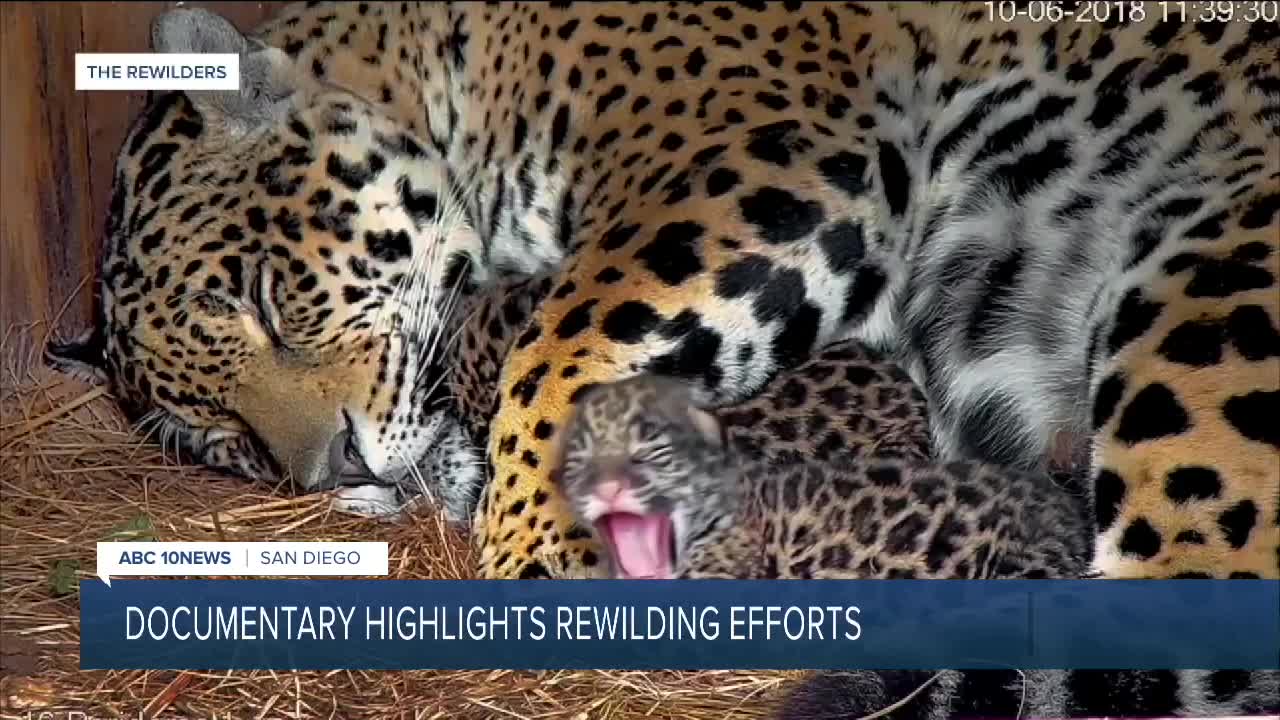
The renowned efforts of Tompkins Conservation brought back jaguars to the southern cone of Chile and Argentina. Tompkins Conservation bought private land for conservation, restored ecosystems, reintroduced missing species, and donated the land to create public national parks in the southern tip of South America.
"The absence of the top predator brings chaos to the system you bring a top predator back in this case the jaguar, and it begins to sort out everything else," Kris Tompkins said.
"Today we have 35 jaguars released into the wild," Tompkins said.
"And there are big changes in the ecosystem and in the population base of other species," Tompkins said.
In the United States, American Prairie is working to bring back American wildness.
"What's missing on the landscape. You should see a herd of bison and elk behind them, and pronghorn behind them, and maybe a wolf or a grizzly bear at the same time. That's what's missing and that's what American Prairie is trying to bring back," a speaker in the documentary said.
American Prairie says their bison number over 800 animals. They have amassed a land base of private land and public grazing leases that exceed a half million acres, with a target of growing to 3.2 million acres, comparable to the size of Connecticut. A mission that puts them in conflict with cattle ranching in the same area.
"I think bison generally present a threat, kind of existentially, to what people see as their way of life out here. But there is no future that I can imagine that doesn't involve lots and lots of cattle and cattle producers living alongside of the American prairie," a speaker in the documentary said.
While some rewilding initiatives can be controversial, the U.N. has listed rewilding as one of several methods needed to achieve massive scale restoration of natural ecosystems, which it says should be accomplished by 2030 as part of its 30/30 campaign.
The Samara Karoo Reserve, one of the largest private reserves in South Africa, combines rewilding and luxury conservation-driven tourism. With a few luxurious lodges on a vast reserve, guests actively contribute to Samara’s ongoing restoration. A key part of its rewilding strategy is the introduction of elephants to the reserve.
"Oftentimes, the very largest creature is creating habitats for a lot of the much smaller creatures as well," a speaker said.
"Samaras pioneered the reintroduction of the first lion, the first cheetah, and the first elephant back into this region in over 100 years," a speaker in the documentary said.
"Bringing together all of these pieces of the ecological puzzle to enable these ecosystems to flourish. We all deserve a much wilder world."
Click here for more information.
This story was reported on-air by a journalist and has been converted to this platform with the assistance of AI. Our editorial team verifies all reporting on all platforms for fairness and accuracy.
