

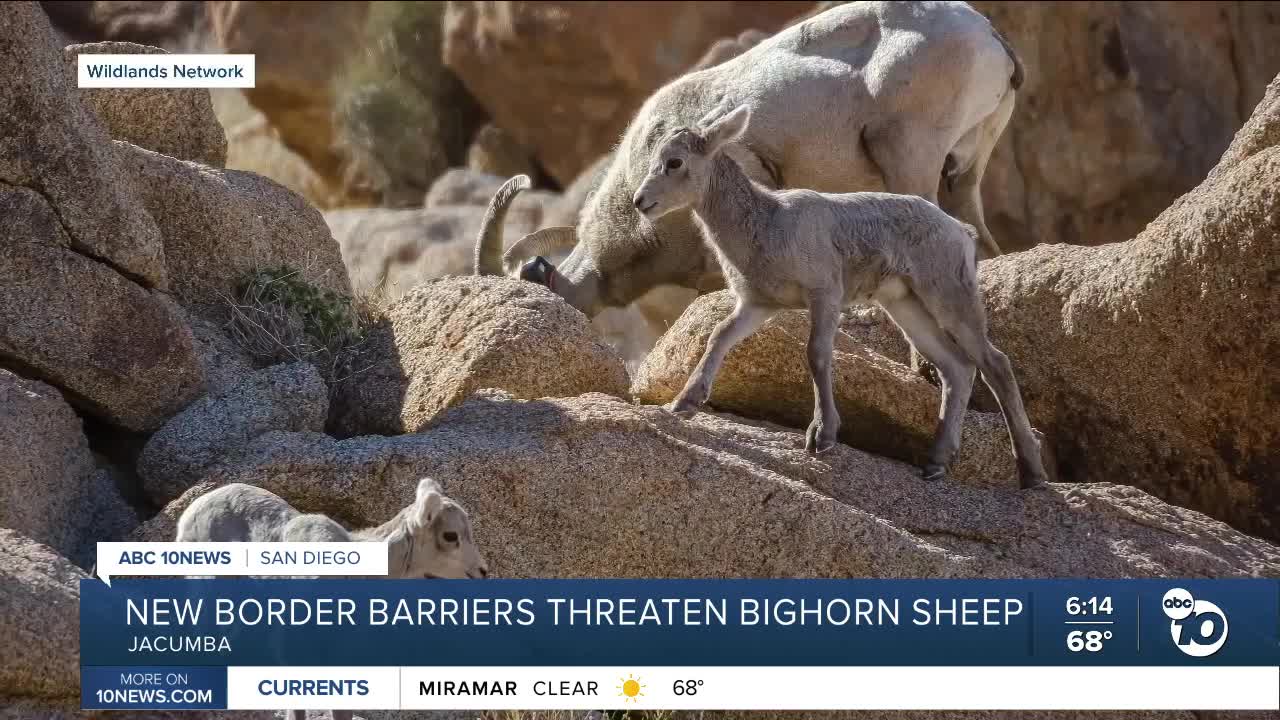


JACUMBA, Calif. (KGTV) — New border security measures in the Jacumba Wilderness are raising concerns among wildlife scientists about the safety of endangered Peninsular bighorn sheep.
Razor wire and new barriers installed along parts of the U.S.-Mexico border are cutting off the animals' migration paths and their water supply. For generations, animals like the bighorn sheep have crossed the border, but wildlife experts say the new fencing is blocking their pathway.
Along stretches of the border, large coils of concertina razor wire now fill the openings where Peninsular bighorn sheep once moved freely.
"They had to follow the seasons, they had to follow water resources, they had to shift with those seasons and what areas were productive, so it’s life or death out here, that’s how you have to live," Christina Aiello said.
Aiello is a wildlife biologist for the Wildlands Network. She says the concertina wire is dangerous for the already endangered bighorn sheep.
The wire is part of the approved expansion of the border wall between the United States and Mexico, but the sheep rely on land and water from both sides of the border to survive. Aiello says the main water source for these animals is on the Mexico side.
"They came in contact with that concertina wire and have since been traveling along it so we’re worried once they travel far enough and recognize that there aren’t any gaps, that there’s no way for them to get to that water, as is starts to getting hotter and drier they could get more and more desperate and actually try and cross the concertina wire," Aiello said.
As the weather begins to warm up, biologists worry the animals will take desperate measures.
"Bighorn sheep can jump pretty high, and when they are desperate and in search of water, and they have young with them, they start to get panicky, and it’s possible they can try and jump that fence and really injure themselves and potentially get killed," Aiello said.
Neighbors in the Jacumba Wilderness say they have encountered bighorn sheep in the area for years.
"They were like, within 30 feet, they were groups of them moving south along the mountain, and then they crossed the road and were just staring. I was amazed I’d never seen anything like it," Edie Harmon said.
Harmon is an Ocotillo resident who hikes the area frequently. She says she has seen firsthand the installation of the concertina wire and worries about the future of the animals.
"I know you can cut it if you’re a human, you can cut it with whoppers, but that’s not the same as bighorn sheep being able to cross over, so I don’t know what’s going to happen," Harmon said.
The border wall is expected to be completed in 2027. The concertina wire is the first step before the wall goes up. Aiello says this is the start of a much bigger environmental issue that will not just impact bighorn sheep.
"We’ve been asking for other accommodations for larger animals because we know that they rely on a lot more habitat, and if they’re not able to move through this border wall, there’s going to be a lot of long-term consequences," Aiello said.
I reached out to U.S. Customs and Border Protection. In a statement, officials said they need to build the physical structure necessary to secure the southern border.
"CBP is committed to environmental stewardship, while still meeting the Border Patrol’s operational requirements," a CBP spokesperson added. "Since 2007, CBP has incorporated small wildlife passages into the border wall design to accommodate the movement of small wildlife."
However, Aiello says biologists want more environmental reviews on the dangers of these physical barriers, specifically regarding larger animals.
"We have good data that show this is where the bighorn cross, this is where the mountain lion cross. Can we have a targeted opening where you have other surveillance methods but still allow the wildlife to cross while you’re monitoring the area with other means?" Aiello said.
For now, wildlife biologists say they are trying to protect the animals before it is too late. Federal officials say they are continuing to monitor the installation of additional small wildlife passage locations within existing and new border wall construction.
This story was reported on-air by a journalist and has been converted to this platform with the assistance of AI. Our editorial team verifies all reporting on all platforms for fairness and accuracy.
