



Being by the water is a must for many San Diegans, and for others, being in the water is the draw like Patrick Dinneen, who has been diving off La Jolla for decades.
But lately, he’s noticing more activity underwater.
“I've been seeing a lot of horn sharks lately, anywhere from like 40 to 100 ft," Dinneen says. "We've been seeing a lot more leopard sharks, Tope sharks...”
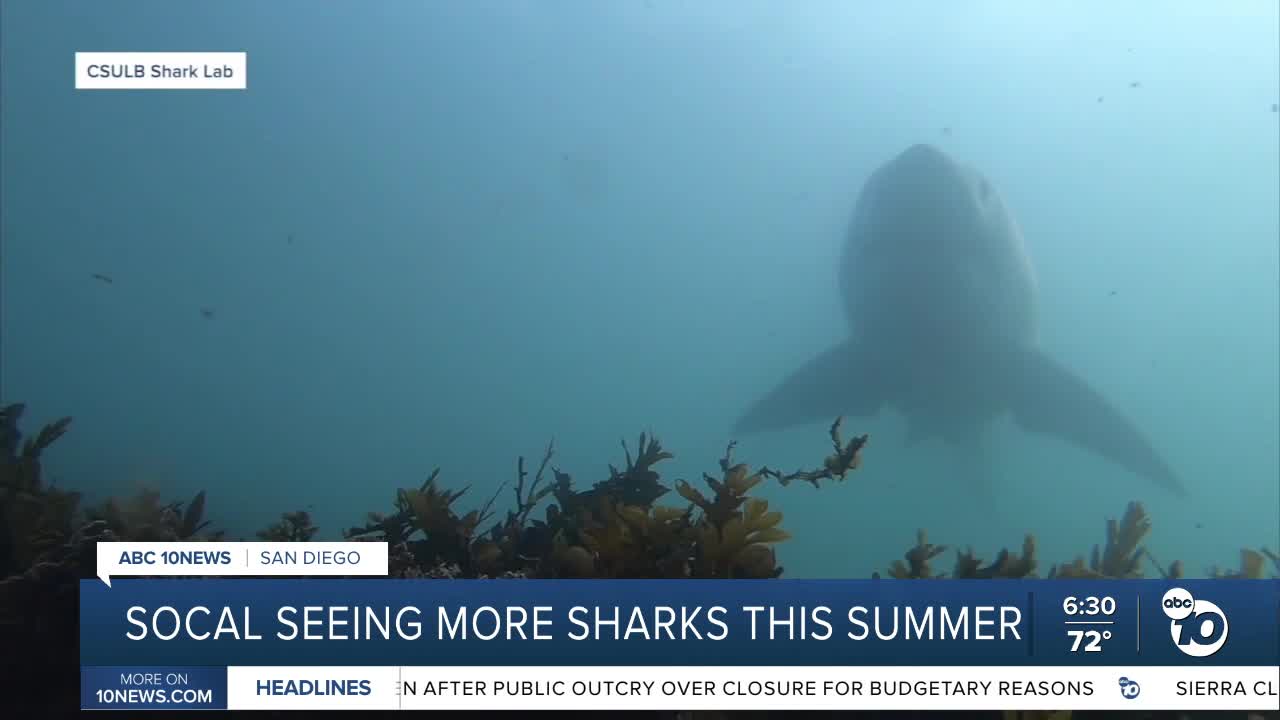
Leopard sharks are familiar sightings this time of year, but the shark getting the most attention this summer is the great white.
So, are there actually more of them? ABC 10 News asked Jack Elstner is a PhD candidate at Scripps Institution of Oceanography.
“Southern California is a really important nursery area for juvenile white shark populations in the Pacific Ocean," Elstner says.
He and his team have been tracking juvenile white sharks off Torrey Pines.
They don’t just watch from the shore. Researchers get up close, launching a small boat right from the end of the Scripps Pier, tagging sharks with acoustic transmitters, and tracking them using receivers along the coast.
"We can have as many as 40 individuals along a very small stretch of coastline," Elstner says.
And this summer, warmer water could keep those sharks here longer.
“We're on the edge of a very strong El Niño that's going to bring warm water to Southern California and it's going to stay later in the year," Elstner says. "We could expect sharks to also potentially stay later in the year and in some areas we could actually see more sharks.”
But Jack says that doesn’t mean San Diego is suddenly a shark hotspot. Other areas of Southern California are currently seeing more juvenile white shark activity.
And researchers are also looking at the bigger picture: How climate change could eventually shift where these sharks live.
"Potentially climate change could shift the distribution of these juvenile animals," Elstner says.
So should swimmers be worried?
"Despite the fact that we're seeing more and more sharks every year, despite the fact that there are more and more people going into the ocean, we haven't seen bite rates increase," Elstner says.
In fact, there have been 29 unprovoked great white shark bites in California over the last decade — two fatal.
"When you're in the ocean, use common sense, be smart, never approach a shark," Elstner adds.
Researchers say the sightings are a reminder that sharks are a natural part of our coastal ecosystem, and long-term monitoring like the one Scripps Institution of Oceanography does with CSULB's Shark Lab, can help us understand how that ecosystem is changing.
