

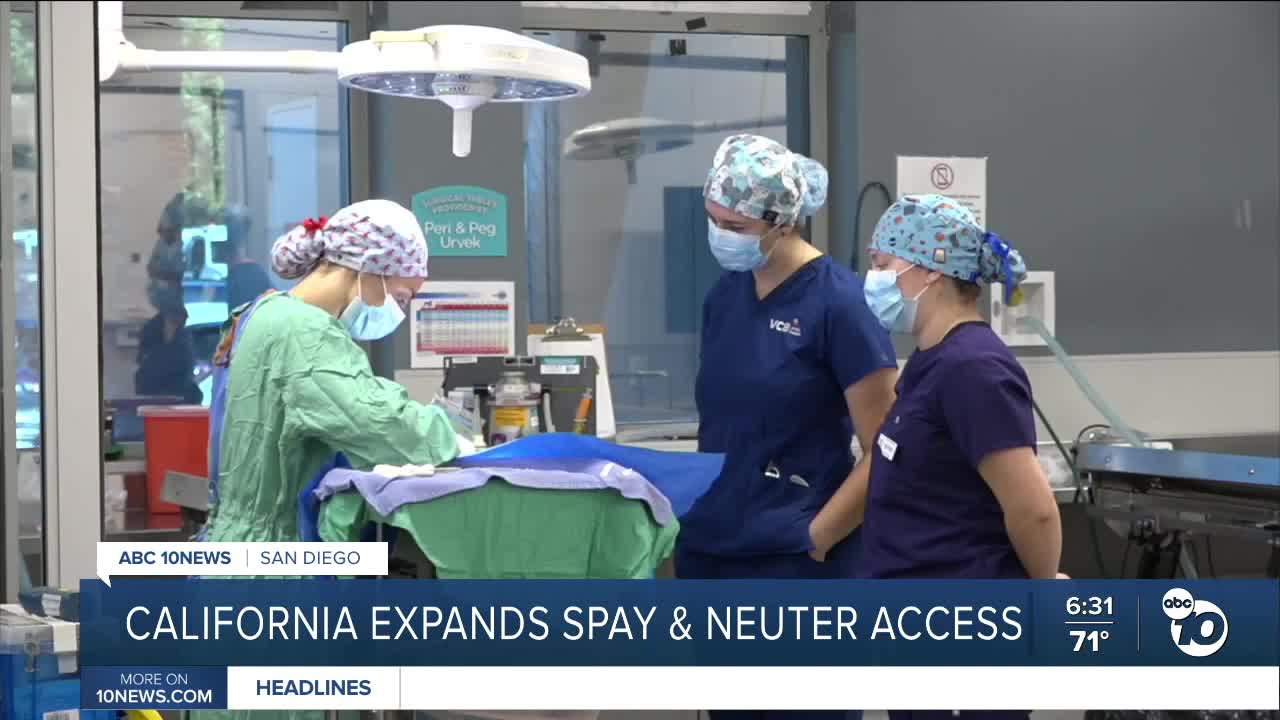


A new California law could change where and how often spay and neutering surgeries can happen.
“It really opens the door to expand our ability to provide more options for spay neuter throughout the state of California," Chief Medical Officer, VP of Shelter Medicine at San Diego Humane Society, Zarah Hedge says.
AB 2010 signed by Governor Newsom removes a requirement that surgeries be performed in a separate surgical suite.
That means mobile clinics can use community centers or gymnasiums. The law allows procedure to areas that may not have facilities set up for this kind of work which is in growing need.
“We've had 13 straight months of having more dogs in care daily than ever before. Currently we're, we have about 750 dogs in care every day, and if we compare that to 2024, that's almost a 16% increase," Hedge says.
She says the new law doesn't, by itself, create more clinics, or more veterinarians, or more funding. Those are still pieces that have to come together.
“We still need the staffing to do that. We need veterinarians, we need veterinary technicians," Hedge says.
But it does remove one barrier, giving organizations another way to bring services to communities.
“Being able to use again community centers, gymnasiums, different places like that to provide high volume, high quality spay neuter is really important," Hedge says.
The law takes effect in January. Hedge says some groups are already running these mobile-style clinics and the change could allow them to expand. San Diego Humane Society is also planning a new hospital with a large spay-neuter center. But she says don't expect the effect on pet overpopulation to happen overnight.
“Certainly, probably, you know, we're it's gonna take several years to see effects of large scale spay neuter and how that's gonna impact pet overpopulation in California," Hedge says.
In the meantime, Zara says pet owners don't have to wait for the law to take effect.
Low-cost spay and neuter services are already available through shelters and she says using them can help keep more animals from entering an already-crowded system.
“Make sure that you don't contribute to the overpopulation of animals cause it truly is a crisis right now," Hedge says.
The goal is to make spay-neuter services easier to bring into communities and, over time, help reduce the number of animals entering shelters in the first place.
