

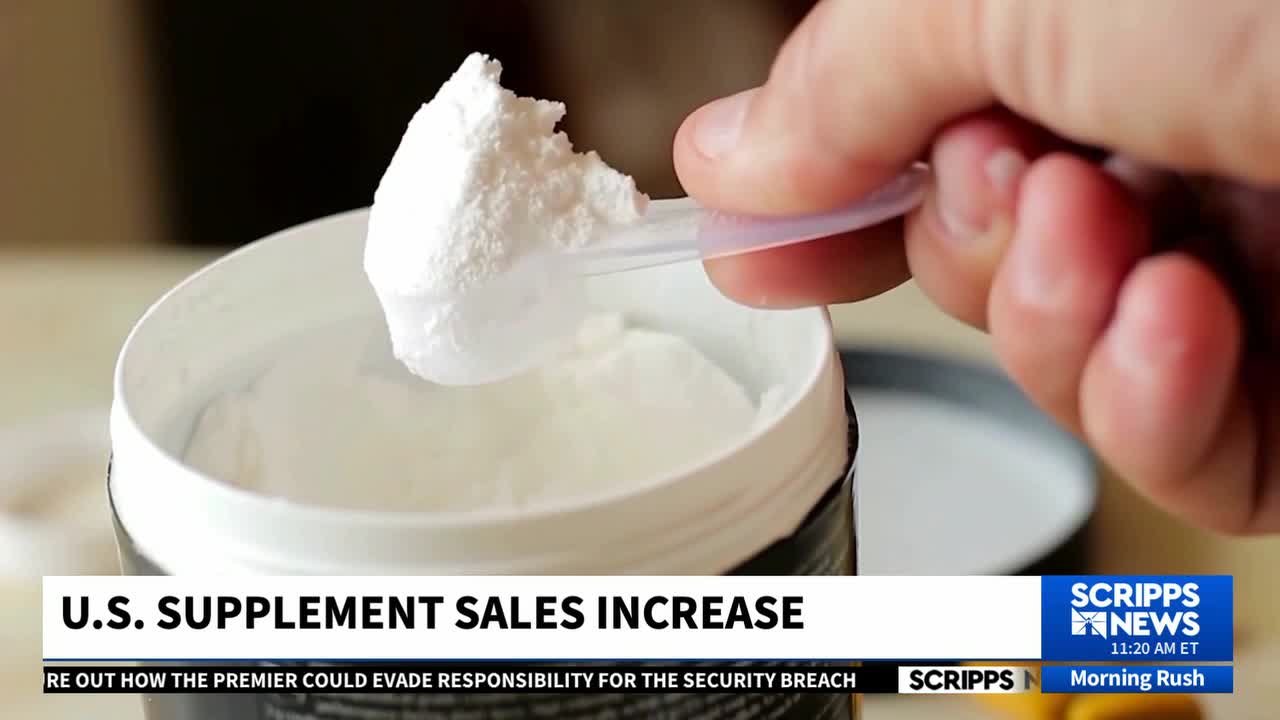


The U.S. dietary supplements market is booming and is expected to surpass $60 billion this year.
The industry now features more than 95,000 unique products — most of them multi-ingredient supplements promising benefits such as weight loss, better sleep and stress relief.
"I think what the big thing is, is that you've created a lot of the supply," said Jensen Jose, regulatory counsel for the Center for Science in the Public Interest. "And the demand changed because of the claims, right?"
"Most of the dietary supplement regulation was created in 1994 before we didn't even, before we knew what the internet really was," he added.
RELATED STORY | Pharmacists rank best over-the-counter medicines
Supplements are increasingly appearing in snacks and drinks, with social media ads generating hundreds of millions of views. Ingredients such as protein, collagen and L-theanine have surged in popularity in food products containing supplements. NielsenIQ says TikTok is driving much of this trend.
"People are more aware of being, of trying to be healthy but that the inadvertent, like, you know, consequences, you have these bad actors that come on top," Jose said.
A YouGov study shows vitamins remain the top choice across all age groups, with 64% of baby boomers purchasing vitamins compared to just 48% of Gen Z. Younger generations favor protein supplements and are driving demand for probiotics and herbal products.
"There's this just unaccountability that dietary supplement manufacturers and marketers have and just every point of the industry, they're just not really held accountable," Jose said.
IN CASE YOU MISSED IT | Excess amounts of this B vitamin linked to higher heart disease risk
The Food and Drug Administration does not review or approve dietary supplements for safety and effectiveness before they reach shelves. Manufacturers are not required to prove their products are safe or effective before selling them, leaving much of the oversight to existing products already in stores.
"The biggest red flag is are they making a claim that just sounds too good to be true," Jose said.
Experts recommend talking to a healthcare professional before starting any new supplements.
