

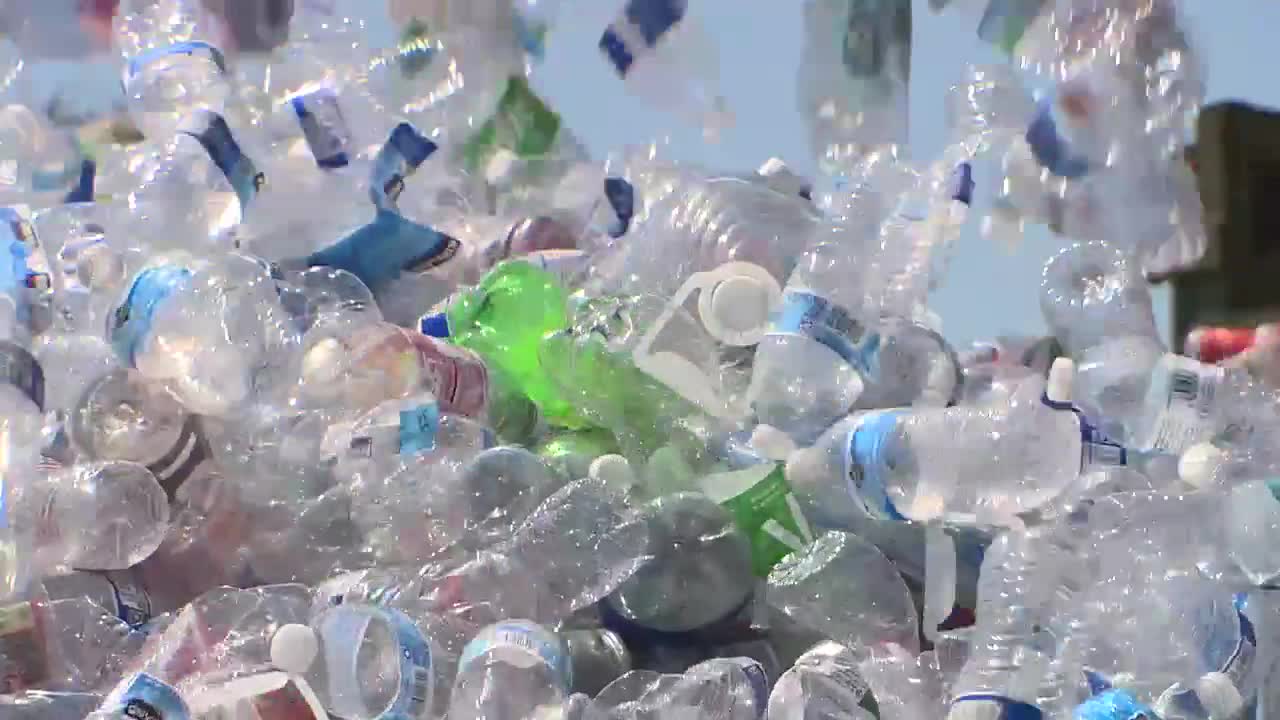


Many San Diego residents are turning in their recyclables for some extra cash at local recycling centers like the Miramar Recycling Center as part of California's Redemption Value Program.
Sandy Law and James Montero showed up at the Miramar Recycling Center with two years' worth of plastic water bottles, looking to exchange their recyclables for cash. For them, it's a way to take care of the environment while working toward a goal of saving for an exercise bike.
"Growing up, I recycled with my parents, uh, for extra cash, um, for food on the table and such. So now that I've kind of grown up and live away from them, we're starting to do that again," Law said.
"It's a form of income that you know that we don't have to work so hard for. You just walk to the kitchen and throw it in the bag. And the thing is you're already using this stuff," Law said.
Alexander Galasso, the Waste Reduction Program Manager for Environmental Services for the City of San Diego, said the recycling program is part of the California Redemption Value Program, where customers get back what they've already paid for.
"Whenever you go buy a 6-pack of soda or a 6-pack of beer, you're actually paying, I believe, 5 cents per bottle when you are at the retailer. So all you're doing right now is getting that money back that you've already spent on those bottles or cans," Galasso said.
Ten states across the country have this type of program.
Here's how it works: When you show up at a recycling center, staff sort your recyclables by the type of material — whether it's aluminum cans, glass bottles, plastic bottles, or wine and spirits — and then weigh them. The exchange price is based on pounds and varies depending on the current scrap and processing value.
In California, the state mandates a minimum refund value of 5 cents for containers less than 24 ounces and 10 cents for containers 24 ounces or larger. Recycling centers also often accept copper, brass, stainless, and other aluminum scrap metal.
Some people come every couple of weeks for the extra cash.
"Normally, I get like $14 to $17," Carmen Sohikish said.
"I always tell my husband this is good for my Starbucks card. It's extra money. But I'm not going this for the money it's for fun. I feel good when I think I can help the environment," Sohikish said.
After two years of collecting water bottles, Law walked away with $57.
"How much did you get? 57 bucks. Not bad ... not not more than I thought. It was supposed to go towards the bike. What are you going to use that for? We'll probably still save up," Law said.
Officials remind residents that it is considered trespassing and theft to collect cans from private property or unabandoned bins.
This story was reported on-air by a journalist and has been converted to this platform with the assistance of AI. Our editorial team verifies all reporting on all platforms for fairness and accuracy.
