

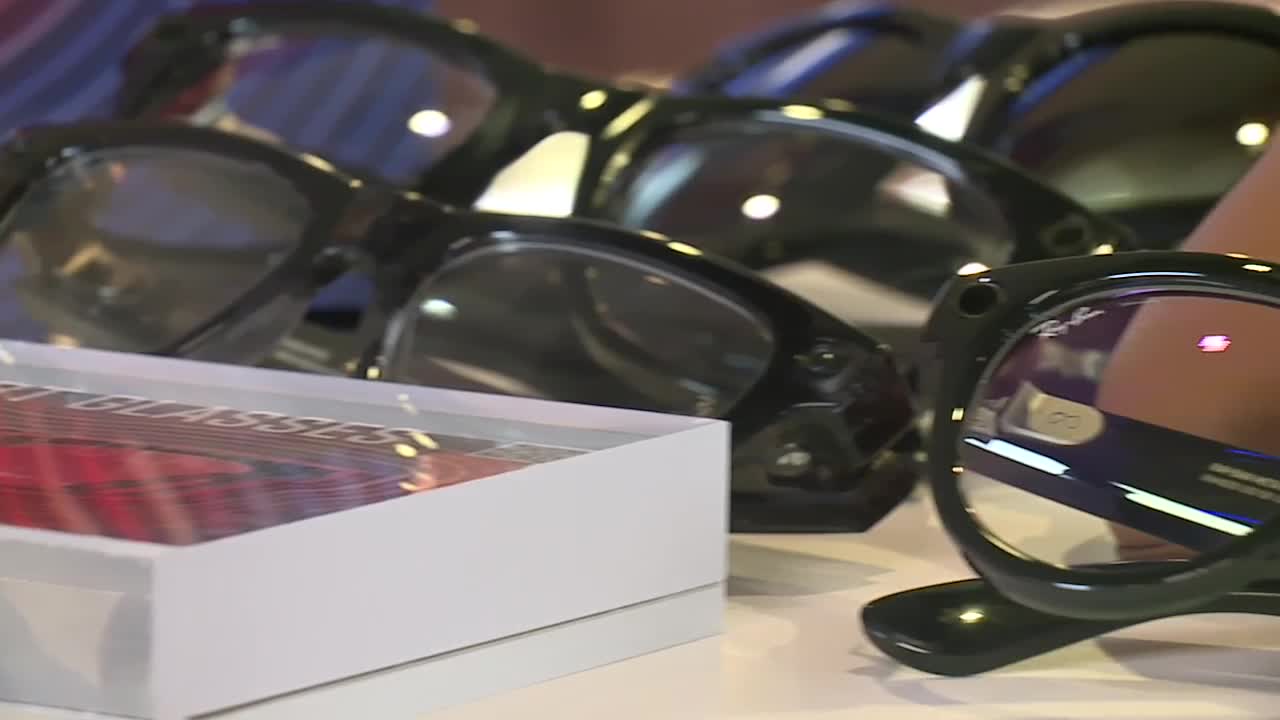


Smart glasses have gained popularity around the world as they offer more features, from listening to music and recording video to catering to different lifestyles and styles.
Depending on the style and brand, smart glasses can cost anywhere from $150 for simple audio models with basic functions to more than $1,000 for premium augmented reality versions.
Companies like Meta say they have tried to offer variety to customers with different needs and budgets.
"I think for us it's really important that AI glasses that we're building are accessible, right?"
Ankit Brahmbhatt, the director of AI glasses for Meta, said people are also leaning into the advancements of technology, using smart glasses to help with their everyday lives — often getting prescription lenses with the glasses.
"We've been finding accessibility communities to be like using them as part of the blind and low vision community, where they can actually see in a much more visual way using the cameras that are integrated into the glasses."
Brahmbhatt said.
Vision insurance can also help offset the cost. Dr. Andrea Meagher at Invision Optometry has helped patients explore those options.
"Through your employer, you can use those benefits on these glasses just like you would on another pair of glasses. So you can really get good discounts that way."
Meagher said.
She said you can often maximize your coverage, as some insurance companies offer separate coverage for lenses and frames.
While smart glasses with extra technology are more expensive, Meagher said the prices can often be comparable to specific types of regular frames.
"There are some nice designer frames too that will also be expensive, but as far as technology goes, it's definitely unique and you're going to be paying for that."
Meagher said.
This story was reported on-air by a journalist and has been converted to this platform with the assistance of AI. Our editorial team verifies all reporting on all platforms for fairness and accuracy.
