

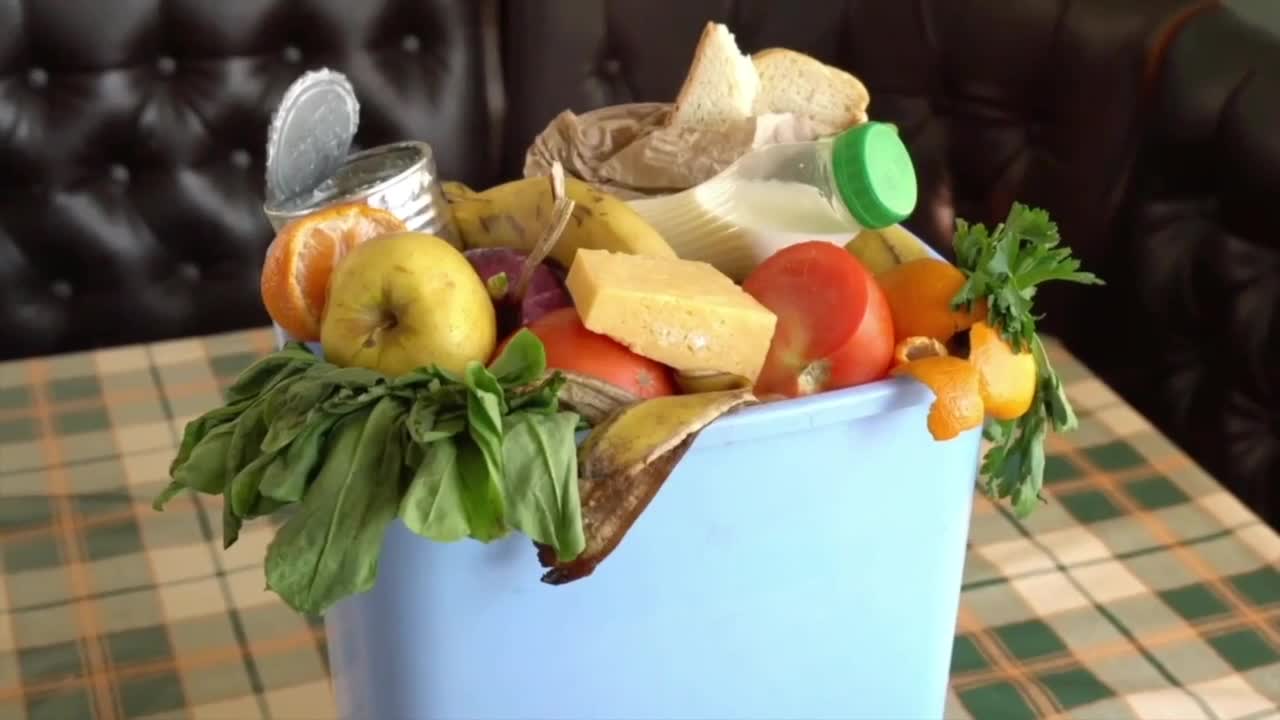


SAN DIEGO (KGTV) — As consumers look for ways to save money, experts say focusing on what's inside your fridge could be the key to cutting back on costs through smarter buying habits.
Every year, U.S. consumers waste nearly 35 million tons of food, according to data from ReFED, a nonprofit that works to stop food waste. When it comes to your wallet, that translates to $261 billion a year, broken down to about $800 per person.
But experts say there are things you can be mindful of to keep your money from being thrown down the garbage disposal and waste out of landfills.
Ruth Jansen, the Sustainable Systems Coordinator for I Love A Clean San Diego, says it starts even before you head to the grocery store.
"If you want to sit down with your family, talk about those specific meals you're going to make, those specific items you need to buy from the store, you're less likely to overspend at the grocery store, but you're also less likely to buy more food than you need that might ultimately end up going to waste," Jansen said.
The numbers show how much people are spending at the grocery store. On average, a single adult spends about $250 to $566 a month on food. A family of four usually spends between $1,000 to $1,600 a month.
But there are ways to cut down on those costs. Where you store your groceries can prolong the freshness of your food, which means there's a better chance it will end up getting eaten instead of being thrown away.
Smart storage tips to extend food life
Certain fruits like berries shouldn't be washed until you are ready to eat them. Store those in the fridge.
When it comes to avocados, leave them on the counter, and once they're ripe, cut the avocados in half, keep the pit in, and rub with lemon or oil to reduce browning.
When it comes to veggies, keep those in the fridge. To make them last longer, you can cook spinach, broccoli or cauliflower and keep it in an airtight container in your freezer.
For onions and potatoes, store them at room temperature. An ideal spot is a dry and dark environment like a drawer or cabinet.
"You'll want to store your potatoes and onions away from one another. Your onions can actually cause potatoes to resprout a lot faster," Jansen said.
Making the most of leftovers
If you have leftover meals, experts suggest finding recipes that can incorporate those ingredients or store them in reusable silicone bags instead of single-use bags.
Not only is it better for the environment, but you'll save money in the long run. Depending on the size of the bag, those can run you $7 to $16 for a certain number. Or you can buy a reusable bag in packs, those run anywhere from $10 to $23.
And lastly, Jansen says look for other ways to repurpose your food.
"So for instance, this banana has been sitting on my counter for a while, and I probably am not going to eat it, but I saw online a nice recipe for a coffee syrup. Rather than putting this into my green bin right away, it might be too late for me to eat it, but I can turn it into a syrup, or I can turn it into banana bread," Jansen said.
This story was reported on-air by a journalist and has been converted to this platform with the assistance of AI. Our editorial team verifies all reporting on all platforms for fairness and accuracy.
