



(KGTV) — A 6-month competition in the sky tests the physical endurance and mental focus of U.S. Navy and Marine Corps pilots to extremes — requiring split-second decision-making, crushing G forces, and calm under extreme stress.
The fight to earn the coveted wings of gold and eventually join the fraternity of the finest warfighters is the subject of a new National Geographic docuseries, "Top Guns: The Next Generation."
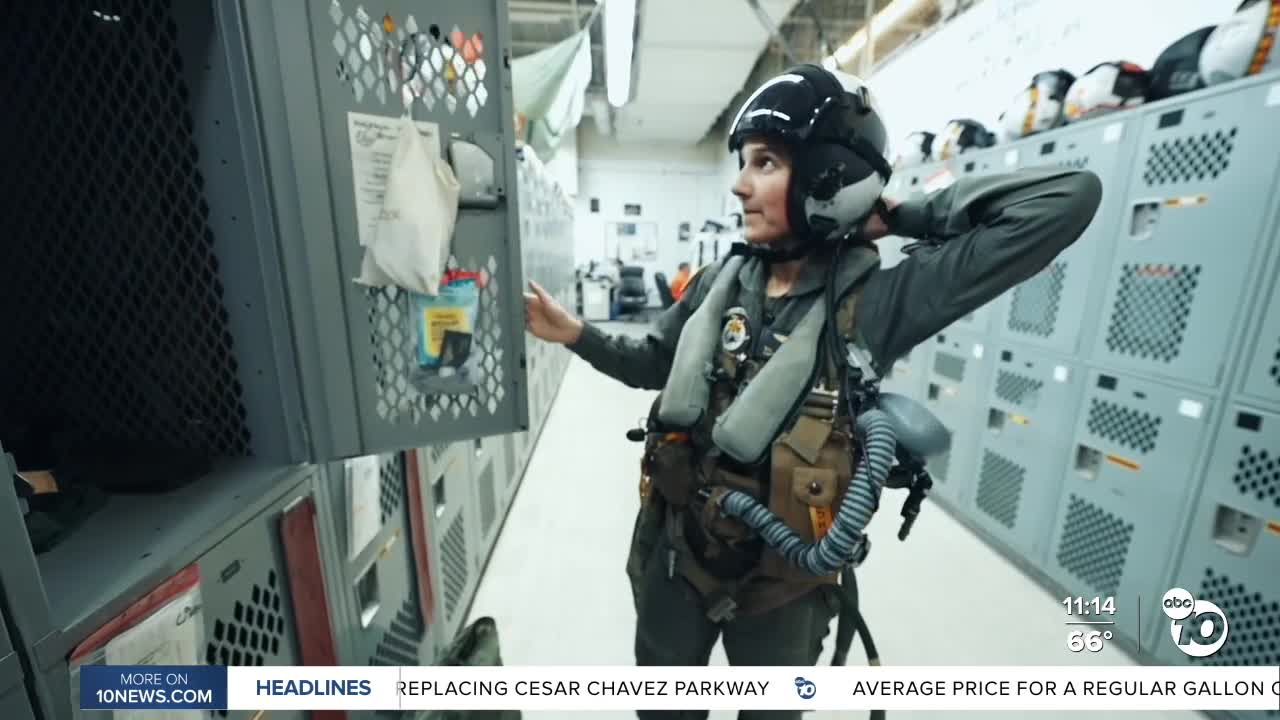
Marine Captain Steph Harris is one of a handful of pilots featured in the series, continuing her training at Fighter Town USA at MCAS Miramar in San Diego.
"I did something that was very difficult and that I considered quitting at times because it was so difficult," Harris said.
Harris took me out to the tarmac where her combat fighter jet, the F-18 Hornet, was waiting. She describes the aircraft as tried and true — a war machine that has been getting the job done in every major U.S. and allied conflict since 1986.
"You're in a very hard machine. It's made of metal. Everything around you is metal. You're pushing your body to its physical limits, and the machine can hang on. And it's training the person to hang on," Harris said.
She describes the connection and dependence between pilot and aircraft as both difficult and amazing.
"Whether that's flying formation or doing an air-to-ground training mission or something air-to-air. There's a lot to manage up there," Harris said.
The heart-pounding aerial cinematography in "Top Guns: The Next Generation" was captured by Kevin LaRosa — stunt pilot, aerial coordinator, and co-owner of X Brand, Hollywood's go-to aviation cinematography company behind blockbusters such as "Top Gun: Maverick" and "F1."
The docuseries required unprecedented access to military training from the Navy and Department of Defense. For LaRosa, it was a chance to take the audience on the same thrill ride as a Hollywood movie — except this time, it was real.
"The whole idea here is I'm trying to get the audience to be right there, make it feel like that afterburner's right in your face sometimes," LaRosa said.
Capturing loud, powerful jets requires more than helicopters. LaRosa's team films the energy and speed with jets and mounted cameras in the cockpit and on the ground.
"If I'm flying our famous Synojet that we built for Top Gun Maverick and I'm right next to somebody doing 350 knots, it's just sitting there in frame. So sometimes we need to put cameras on mountaintops to get those really fast blowbys or use a camera helicopter. So it's about mixing all these assets together to help tell the perfect story," LaRosa said.
LaRosa says he and his director of photography almost speak their own language in a well-orchestrated circus.
"I'm the voice on the radio that's kind of telling the other aviators what to do. You know that looked great. That's a cut back to one. I need you to do it again 10 knots faster, more right bank, so they're listening to my voice and then flying their aircraft according to what they see," LaRosa said.
LaRosa's father and grandfather served in the military. He was keenly aware while shooting the real training in "Top Guns: The Next Generation" that stakes were high — each pilot was under extreme pressure, and lives and careers were at risk.
"She's an incredible aviator. They all are to go through the type of rigorous training, stress that they have to go through over and over and over again, I mean, it really tears you down before it builds you back up. But I think that's where people become their best, and she's a testament to that," LaRosa said.
For Harris, earning her wings was the culmination of that grueling journey.
"Our Constitution is worth fighting for. This dream is worth fighting for," Harris said.
"So to have finally gotten my wings is a tremendous sense of accomplishment and pride for sure," Harris said.
This story was reported on-air by a journalist and has been converted to this platform with the assistance of AI. Our editorial team verifies all reporting on all platforms for fairness and accuracy.
